Facebook Instagram Youtube Twitter

Polyvinyl Chloride (PVC) | Low Thermal Conductivity, Insulating

Learn about Polyvinyl Chloride (PVC), a widely used plastic with low thermal conductivity, ideal for insulation and engineering applications.
Polyvinyl Chloride (PVC) | Low Thermal Conductivity, Insulating

Understanding Polyvinyl Chloride (PVC) and Its Low Thermal Conductivity

Polyvinyl Chloride, commonly known as PVC, is a widely used synthetic plastic polymer. It ranks as the third most produced plastic after polyethylene and polypropylene. This versatility and prevalence are due to its chemical stability, resistance to weathering, and excellent insulating properties. In this article, we will focus on PVC’s low thermal conductivity and its implications in engineering and everyday applications.

What is Thermal Conductivity?

Thermal conductivity is a material property that measures the ability of a material to conduct heat. It is denoted by the symbol ‘k’ and is typically measured in watts per meter-kelvin (W/m·K). Materials with high thermal conductivity can transfer heat quickly, while those with low thermal conductivity are better insulators.

PVC’s Low Thermal Conductivity

PVC has a low thermal conductivity, which ranges typically between 0.14 to 0.28 W/m·K. This low rate of thermal conductivity makes it an excellent material for applications where minimization of heat transfer is crucial. The low thermal conductivity of PVC is primarily due to its high resistance to molecular motion and energy transfer, a characteristic feature of many polymers.

Applications of PVC in Insulation

Due to its insulating properties, PVC is extensively used in building and construction, notably in window frames and doors, where it helps maintain internal temperature levels, reducing heating and cooling costs. Further applications of PVC with its low thermal conductivity include:

  • Electrical Insulation: PVC is commonly used in electrical cables and wires as an insulating material, preventing accidental electrical discharges and resistances.
  • Piping: In plumbing, PVC pipes are employed not only due to their resistance to chemical corrosion but also because they minimize heat transfer between the pipe’s contents and the external environment.

Benefits of Using PVC

The use of PVC extends beyond just its thermal properties. Some of the universal advantages of PVC include:

  • Durability: PVC is resistant to oxidation and degradation, making it last longer than many other materials.
  • Cost-Effectiveness: It is relatively inexpensive to produce and maintain, making it a cost-effective option for a variety of applications.
  • Chemical Resistance: PVC’s resistance to chemicals, water, and the general environment makes it suitable for harsh engineering applications.
  • Recyclability: PVC can be recycled, reducing its environmental impact and promoting sustainable use in manufacturing.

In conclusion, PVC’s low thermal conductivity plays a crucial role in its selection as a material for various applications, especially where insulation is a critical factor. Its additional properties of durability, chemical resistance, and cost-effectiveness further justify its wide usage in the engineering and construction sectors. Understanding these properties helps in designing more efficient and effective products and infrastructure, catering to our advancing technological and environmental needs.

Expanded Graphite | Flexible, Heat Spreading Applications

Learn about expanded graphite, a versatile material with high thermal and electrical conductivity, ideal for heat management in various engineering applications.

Expanded Graphite | Flexible, Heat Spreading Applications

Understanding Expanded Graphite and Its Applications in Heat Spreading

Expanded graphite is a form of graphite that undergoes a chemical or thermal treatment to increase its volume significantly. This material retains the inherent properties of natural graphite, such as high thermal conductivity, resistance to heat, and electrical conductivity, but with enhanced interlayer spacing. This unique feature makes expanded graphite an ideal candidate for a variety of engineering applications, particularly in thermal management systems.

Production of Expanded Graphite

The process of creating expanded graphite begins with natural graphite flakes. These flakes are intercalated with an acidic solution, typically sulfuric acid, which is then washed and dried. The acid-treated graphite is rapidly heated to a high temperature, causing the graphite structure to expand as the compounds within the layers decompose and volatilize. This expansion can increase the volume of the graphite up to 300 times its original size, creating a worm-like, porous structure.

Properties of Expanded Graphite

Expanded graphite inherits beneficial properties from its parent material—graphite, which include:

  • High thermal conductivity: Graphite has one of the highest natural conductivities, making it excellent for spreading and dissipating heat efficiently.
  • Electrical conductivity: It maintains substantial electrical conductivity, which is valuable in applications requiring both heat and electrical current management.
  • Chemical resistance: It is resistant to most chemicals, which makes it suitable for environments exposed to aggressive substances.
  • Flexibility: Unlike other forms of graphite, expanded graphite can be compressed and shaped, adding to its versatility in applications.

Applications in Heat Spreading

One of the critical applications of expanded graphite lies in its ability to spread heat. Here are several ways in which this material can be employed:

  1. In Electronic Devices: Expanded graphite is used in smartphones, laptops, and other electronics to dissipate heat away from critical components like processors and batteries, thus enhancing their performance and longevity.
  2. In Energy Storage Systems: It serves as an excellent layer in batteries, particularly in lithium-ion batteries, to manage the operational temperature and improve efficiency and safety.
  3. Thermal Interface Materials (TIMs): TIMs are essential components used between heat sources and heat sinks to enhance thermal coupling. Expanded graphite sheets are employed as TIMs due to their high thermal conductivity and flexibility.

The utilization of expanded graphite in these applications not only enhances the efficiency and performance of the devices but also contributes to their durability and safety by effectively managing and dissipating heat.

Conclusion

Expanded graphite is a versatile engineering material that offers exceptional thermal management properties. Its ability to expand and create porous, flexible forms with high thermal and electrical conductivity makes it ideal for a range of advanced applications, particularly in thermally demanding environments. Engineers continuously explore new ways to leverage expanded graphite’s unique properties, ensuring it remains a critical material in the design and optimization of modern technologies.

This remarkable material exemplifies how advanced material science can lead to innovative solutions in various fields of engineering, offering substantial benefits in efficiency, safety, and performance across multiple applications.

Silicon Nitride | Thermal Shock Resistance, Engine Components

Learn about Silicon Nitride’s exceptional thermal shock resistance and its critical use in high-performance engine components.

Silicon Nitride | Thermal Shock Resistance, Engine Components

Understanding Silicon Nitride: Thermal Shock Resistance and Applications in Engine Components

Silicon nitride (Si3N4) is a ceramic material known for its high strength, toughness, and excellent thermal and chemical stability. These properties make it ideal for various demanding engineering applications, particularly in high-temperature environments.

Thermal Shock Resistance of Silicon Nitride

Thermal shock resistance is a critical property for materials used in high-temperature applications. It refers to the ability of a material to withstand sudden changes in temperature without undergoing damage. The superior thermal shock resistance of silicon nitride is one of its most defining characteristics. This property is due to the material’s high thermal conductivity, which helps in dissipating heat quickly, and its low thermal expansion coefficient, which reduces the stresses induced by temperature changes.

  • Thermal Conductivity: Silicon nitride exhibits a thermal conductivity in the range of 16 to 30 W/mK, which aids in the rapid dissipation of heat.
  • Thermal Expansion Coefficient: It has a comparatively low thermal expansion coefficient (approximately 3.0 x 10⁻⁶ /K), which minimizes the expansion and contraction under thermal cycles, thus reducing the generation of stress.

The combination of these properties enables silicon nitride to perform well under conditions where other materials might fail due to cracking or thermal degradation.

Applications in Engine Components

Si3N4 is extensively used in the automotive industry, specifically in the design and manufacture of engine components where high temperature, wear resistance, and durability are crucial. Some of the key applications include:

  • Valve Components: Silicon nitride is used in the manufacturing of valves and valve seats due to its hardness and wear resistance, which significantly extend the lifespan of these components even under extreme conditions.
  • Turbocharger Rotors: The use of Si3N4 in making turbocharger rotors substantially improves the engine’s efficiency. The material’s ability to withstand high temperatures and rotational speeds reduces the overall wear and tear, enhancing performance and reliability.
  • Glow Plugs: For diesel engines, silicon nitride is employed in the manufacturing of glow plugs. The material’s excellent thermal properties ensure quick heating and high resistance to thermal shock, thereby improving the cold-start performance of engines.
  • Bearing Balls: In high-performance bearings, silicon nitride balls are preferred over traditional materials due to their lightweight nature, which reduces the centrifugal force and overall bearing wear at high speeds.

The adoption of silicon nitride in engine components not only boosts performance but also contributes to the longevity and robustness of the engines, affirming its vital role in modern engineering materials.

Conclusion

Silicon nitride stands out in the field of engineering materials due to its exceptional thermal shock resistance and mechanical properties. Its application in critical engine components harnesses these qualities to achieve increased efficiency, performance, and durability. As engineering demands evolve, the role of Si3N4 is destined to expand, potentially leading to new innovations and applications in various high-stress industries.

Exploring and understanding silicon nitride offers a glimpse into the future of engineering materials, one that balances the extremes of performance with the demands of real-world application.

Gallium Nitride | High Electron Mobility, Thermal Conductivity

Gallium Nitride (GaN) is a semiconductor revolutionizing power electronics and RF applications with high electron mobility and thermal conductivity.

Gallium Nitride | High Electron Mobility, Thermal Conductivity

Gallium Nitride: Pioneering Material in Modern Electronics

Gallium Nitride, commonly referred to as GaN, is a semiconductor compound consisting of gallium and nitrogen. Owing to its unique electronic properties such as high electron mobility and great thermal conductivity, GaN is revolutionizing various fields, notably power electronics and RF (radio-frequency) applications.

High Electron Mobility

GaN stands out due to its high electron mobility, which refers to the speed at which electrons travel through a semiconductor. Why does this matter? High electron mobility translates into faster switching speeds and higher operating frequencies for electronic devices. This makes GaN highly efficient for applications such as satellite communications, radar systems, and cellular base stations.

At its core, the high electron mobility in GaN can be largely attributed to its strong electric fields, which create a phenomenon known as high electron mobility transistor (HEMT). HEMT technology leverages a heterojunction, a boundary created between two different semiconductor materials that exerts a strong electric field. This field helps confine electrons in a thin channel, enabling them to move more rapidly due to reduced scattering and resistance.

Thermal Conductivity

In addition to high electron mobility, GaN is also recognized for its remarkable thermal conductivity. Thermal conductivity is essential for dissipating heat in electronic devices, ensuring that they operate reliably without overheating. GaN’s high thermal conductivity, about 1.3 times that of silicon, allows for higher power densities and improved reliability at elevated temperatures.

This superior thermal performance is beneficial in high-power devices such as LEDs and laser diodes, as well as in high-voltage switching devices utilized in power supplies and inverters. By efficiently removing heat from active device regions, GaN helps maintain optimal performance and prolongs the life of the component.

Applications of GaN Technology

  • Power Electronics: GaN’s efficiency and ability to operate at high frequencies make it well-suited for power converters and inverters in renewable energy systems, hybrid and electric vehicles, and various other power-intense applications.
  • RF Devices: The high frequency capabilities of GaN benefit RF amplifiers used in radar systems, satellite communications, and broadcasting equipment.
  • Lighting: The direct bandgap property of GaN is ideal for LED technology, leading to widespread use in lighting and display applications owing to their lower power consumption and longer operating life.

Future Prospects

As research continues to advance, the potential uses for GaN are expanding. Future developments aim at further increasing thermal conductivity and electron mobility, potentially leading to even more efficient and smaller devices. Other prospective areas of development include the integration of GaN with other materials, such as silicon, to create hybrid devices that leverage the strengths of both materials.

Overall, Gallium Nitride represents a significant leap forward in semiconductor technology, offering powerful advantages that are already beginning to reshape the landscape of electronics and engineering.

Thermal conductivity in metal-organic frameworks

Learn how thermal conductivity applies to metal-organic frameworks (MOFs), influencing their applications in heat management and beyond.

Thermal conductivity in metal-organic frameworks

Thermal Conductivity in Metal-Organic Frameworks

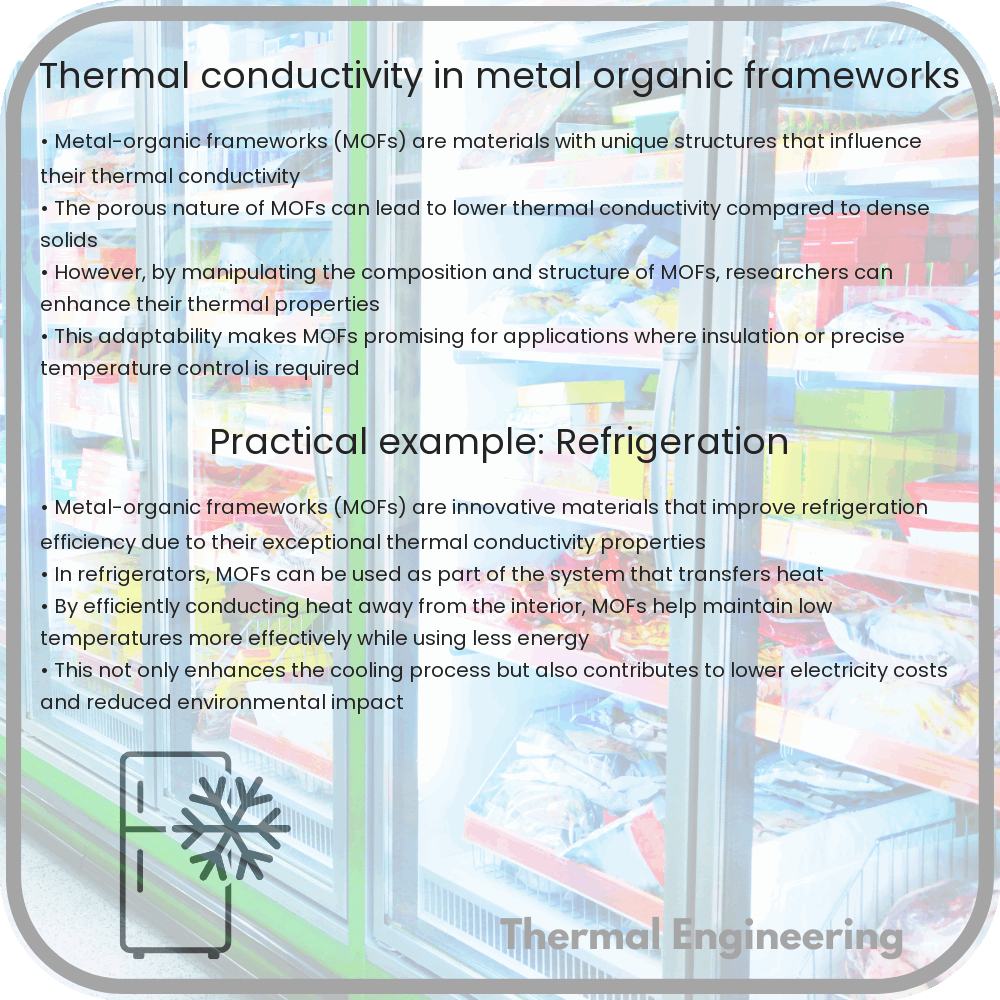
Metal-organic frameworks, or MOFs, are a class of crystalline materials made from the coordination of metal ions with organic ligands. Due to their highly porous structure, these materials have attracted significant interest in various fields such as gas storage, separation, catalysis, and more recently, thermal management. One intriguing aspect of MOFs is their thermal conductivity, which is a measure of a material’s ability to conduct heat.

Understanding Thermal Conductivity

Thermal conductivity (\( k \)) is a physical property that describes how well heat is transferred through a material via conduction. In simpler terms, it tells us how quickly heat moves from the hot part of a material to the cooler part. The units of thermal conductivity are Watts per meter-Kelvin (\( W/m\cdot K \)). High thermal conductivity indicates that the material is a good heat conductor, like most metals, whereas low thermal conductivity suggests poor heat conduction, typical of insulators like rubber or wood.

Thermal Properties of MOFs

Traditionally, MOFs were assumed to exhibit low thermal conductivity due to their porous nature and the presence of organic components, which are generally poor conductors of heat. However, recent studies have challenged this view, revealing that thermal conductivity in MOFs can be influenced by several factors:

  • Metal Centers: The type of metal ions used in the framework can significantly affect thermal conductivity. Metals with higher atomic mass and denser electronic structure tend to enhance thermal conductivity.
  • Organic Linkers: The composition and configuration of the organic ligands also play a critical role. Rigid and shorter linkers can facilitate better phonon transfer, thereby increasing thermal conductivity.
  • Pore Structure and Size: The arrangement and size of the pores can impact how phonons (heat carriers in non-metallic parts) travel through the material. Smaller and well-defined pores usually enhance phonon propagation.
  • Overall Crystal Structure: Defects and disorder within the crystal structure can scatter phonons, hindering effective heat transfer and reducing thermal conductivity.

Enhancing Thermal Conductivity

To improve the thermal conductivity of MOFs, researchers have explored several strategies:

  1. Modification of Metal Ions: By selecting metal ions with higher thermal conductivity properties, the overall heat transfer capability of MOFs can be improved.
  2. Engineering of Organic Ligands: Designing shorter and more rigid organic linkers can minimize scattering and improve the pathway for phonon transport.
  3. Composite Materials: Combining MOFs with other materials, such as embedding them in a matrix of conductive materials (e.g., graphene), can enhance the thermal properties of the composite system.

This field is still in the development stage, but the versatility of MOFs allows for tailored design strategies to enhance their thermal properties for specific applications. For instance, in electronics, where efficient thermal management is crucial, MOFs could offer a promising solution for heat dissipation.

Conclusion

The exploration of thermal conductivity in metal-organic frameworks is a relatively new but rapidly expanding field in materials science. Understanding and manipulating the factors that influence thermal properties of MOFs hold the potential to revolutionize applications where heat management is critical, potentially offering more energy-efficient solutions in industries ranging from electronics to automotive.

Research continues to unveil the complexities of thermal conductivity in these fascinating materials, pushing the boundaries of what is possible with engineered thermal management solutions.

Nickel Foam | Battery Applications, Thermal Management

Explore the unique properties and diverse applications of nickel foam in battery technology and thermal management systems.

Nickel Foam | Battery Applications, Thermal Management

Introduction to Nickel Foam

Nickel foam is a highly porous, metallic structure consisting of nickel or nickel alloy. It features a unique 3D open cell structure, characterized by a large surface area, high porosity, and low density. These properties make nickel foam an ideal candidate for various engineering applications, including battery production and thermal management systems.

Applications in Battery Technology

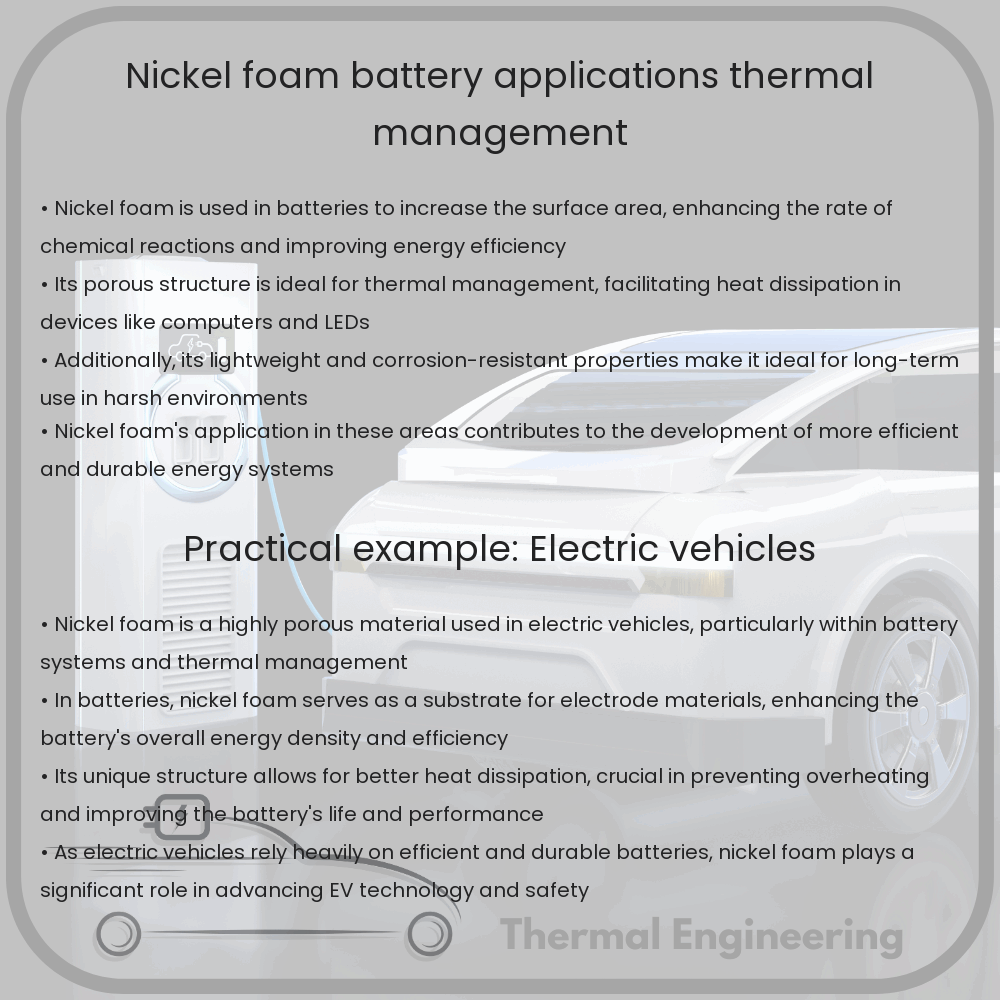
Nickel foam serves as an excellent substrate or current collector in batteries, particularly in nickel-based and lithium-based batteries. Its open cellular structure allows for efficient electrode material deposition, facilitating better ion transport and enhancing the overall electrochemical performance of the battery.

  • Battery Cathodes: In lithium-ion batteries, nickel foam is utilized as a scaffold to hold active cathode materials. This facilitates better contact between the electrode and electrolyte, improving charging and discharging efficiency.
  • Supercapacitors: Supercapacitors utilize nickel foam for its high surface area, promoting rapid charge and discharge rates. This application is critical in delivering high power density and enhancing energy storage capabilities.

Thermal Management

In the realm of thermal management, nickel foam’s large surface area and thermal conductivity contribute effectively to heat dissipation. It is commonly used in heat exchangers where efficient heat transfer is crucial. The foam can be integrated into systems requiring passive cooling solutions to manage the thermal load more effectively.

  • Heat Exchangers: Nickel foam is incorporated into heat exchanger designs to increase the heat transfer area, promoting greater efficiency in transferring heat between materials and fluids.
  • Electronics Cooling: In electronic components, where maintaining lower operational temperatures is vital for reliability and performance, nickel foam helps dissipate heat thereby protecting sensitive parts.

Conclusion

The versatility of nickel foam is evident from its extensive use in battery technology and thermal management. Its unique properties like high porosity and good thermal conductivity make it an indispensable material in engineering applications aimed at enhancing efficiency and performance. As technology progresses, the applications of nickel foam are expected to expand, paving the way for more innovative uses in various fields.

Copper Foam | Heat Sinks, Enhanced Thermal Conductivity

Learn about the benefits and applications of copper foam in enhancing heat sinks for better thermal management in electronics and other devices.

Copper Foam | Heat Sinks, Enhanced Thermal Conductivity

Understanding Copper Foam: A Key Material for Enhancing Heat Sinks in Thermal Management

Heat management is a critical aspect in the design and operation of various electronic devices and industrial processes. One innovative material that has gained significant attention for its ability to improve heat dissipation is copper foam. This material combines the high thermal conductivity of copper with a unique, porous structure that enhances heat transfer capabilities.

What is Copper Foam?

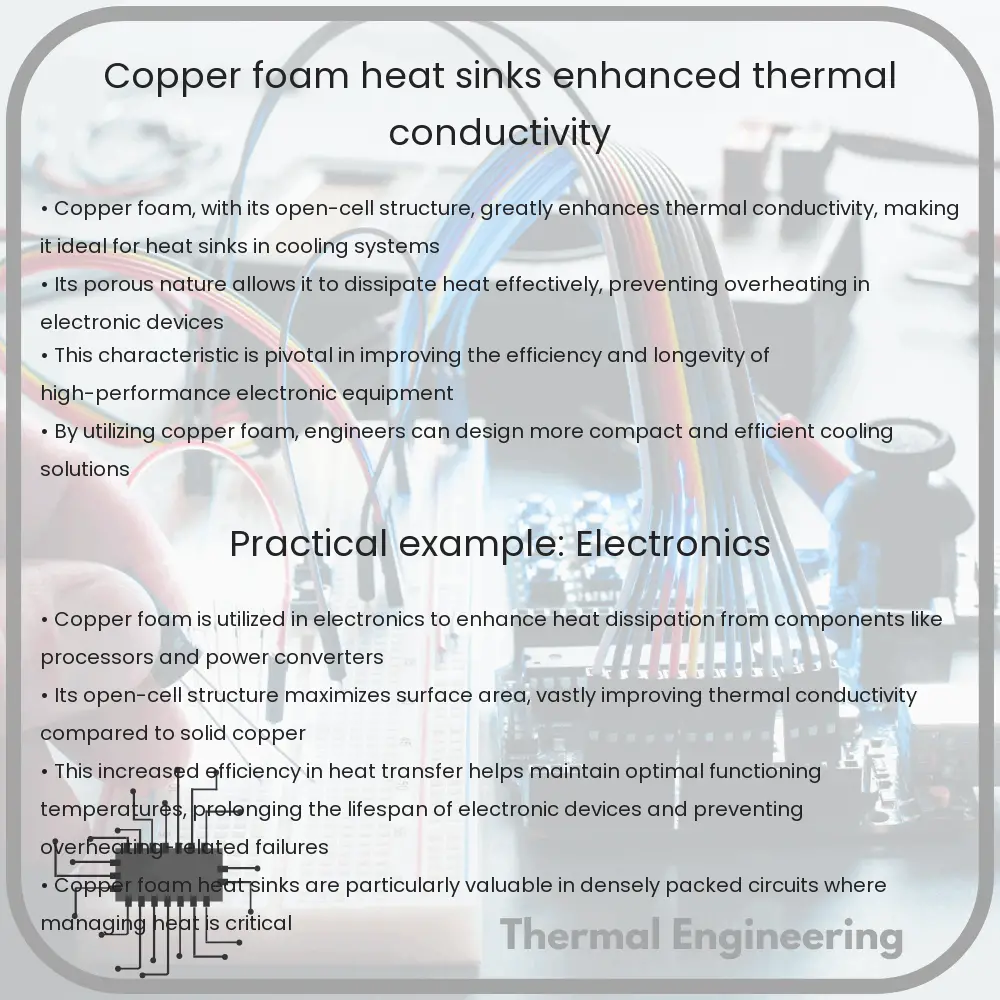
Copper foam is a highly porous, sponge-like material made predominantly of copper. It is characterized by its open-cell structure, which means that the pores in the foam are interconnected, allowing air and fluids to pass through. This structure not only makes the material lightweight but also significantly increases its surface area.

Enhanced Thermal Conductivity

The primary advantage of copper foam is its ability to enhance thermal conductivity. Thermal conductivity, denoted as k, is a measure of a material’s ability to conduct heat. Copper itself already has a high thermal conductivity, typically around 400 W/(m*K), which makes it an excellent material for conducting heat. However, the porous structure of copper foam can enhance this property by facilitating more efficient air or liquid flow through the material, thereby improving heat dissipation.

Applications in Heat Sinks

Heat sinks are components used to dissipate heat in devices such as computers, power supplies, and LEDs, among others. The design of a heat sink is crucial because it directly affects the longevity and performance of the device. Copper foam can be used as a core material in heat sinks due to its lightweight and high thermal conductivity. This allows the heat sink to operate more efficiently, handling greater amounts of thermal energy more effectively than traditional, solid copper heat sinks.

  • Increased Surface Area: The open-cell structure of copper foam increases the surface area available for heat transfer compared to solid forms of copper. This leads to a more efficient dissipation of heat.
  • Lightweight: Despite its metallic nature, copper foam is relatively lightweight, which is an asset in applications where additional weight can be a drawback, such as in aerospace or portable electronic devices.
  • Improved Air and Liquid Flow: The interconnected pores allow better flow of air or liquid, which can be utilized to further enhance the cooling effect through convection.

Further Considerations and Future Potential

The current research and applications of copper foam suggest a broad potential for further innovation in thermal management systems. Scientists and engineers continue to explore different alloy compositions and modifications to the porosity and structure of copper foam to tailor its properties for specific applications. With ongoing advancements, the utility of copper foam in high-performance heat sinks and other thermal management components is likely to expand dramatically.

Understanding and utilizing materials like copper foam is essential for advancing modern engineering solutions and ensuring the efficiency and durability of tomorrow’s thermal management systems.

Zirconium Diboride | Ultra-High Temperature, Thermal Shield

Zirconium Diboride (ZrB2) is a ceramic material known for its ultra-high temperature capability and thermal stability, ideal for extreme conditions.

Zirconium Diboride | Ultra-High Temperature, Thermal Shield

Zirconium Diboride: Revolutionizing Ultra-High Temperature Applications

Zirconium Diboride (ZrB2) is a ceramic material that promises exceptional performance in the most demanding environments. Known for its ultra-high temperature capabilities and thermal stability, this compound is increasingly becoming a material of choice for industries that operate under extreme conditions.

Composition and Properties

Zirconium Diboride is a type of ultra-high temperature ceramic (UHTC) composed of zirconium (Zr) and boron (B). This composition provides a unique combination of properties, such as high melting point, outstanding hardness, and excellent thermal and electrical conductivity, which makes it suitable for various high-temperature applications.

  • High Melting Point: ZrB2 has an incredibly high melting point of about 3246 degrees Celsius, which allows it to maintain structural integrity and functionality at temperatures that would melt most other materials.
  • Exceptional Hardness: It ranks at about 9 on the Mohs scale of mineral hardness, making it extremely resistant to wear and abrasion.
  • Good Thermal Conductivity: Unlike many ceramics, ZrB2 has high thermal conductivity, which is beneficial for applications requiring rapid heat dissipation.
  • Electrical Conductivity: It also exhibits good electrical conductivity, expanding its usability in electronic applications.

Applications in Engineering

The unique properties of ZrB2 make it an ideal candidate for a swath of demanding engineering applications, especially those requiring materials that can withstand extreme heat and wear conditions.

  1. Aerospace Industry: Its ability to withstand high temperatures makes ZrB2 perfect for use in aerospace engineering, particularly in the construction of spacecraft and hypersonic vehicles. It is used to fabricate parts like leading edges, nose tips, and other components exposed to extreme heat during flight.
  2. Thermal Shielding: Zirconium Diboride’s high thermal stability and thermal shock resistance make it an excellent choice for thermal shielding applications. It is used in the heat shields of spacecraft and other high-speed aerospace vehicles to protect them from intense heat during re-entry into the Earth’s atmosphere or while traveling through it at high speeds.
  3. High-Temperature Electrodes: Due to its electrical conductivity and resistance to thermal and chemical wear, ZrB2 can be used as an electrode material in high-temperature electrochemical processes and applications.

Overall, Zirconium Diboride stands out as a material that not only defies the extreme limitations of temperature, wear, and thermal impact but also offers new opportunities and enhanced performance in applications where traditional materials fall short.

The Future of Zirconium Diboride

As research continues, the potential uses of ZrB2 are expanding. Innovations in processing techniques that lower production costs and enhance the material’s properties could make ZrB2 more accessible and practical for an even wider range of applications. This development path points toward an exciting future where zirconium diboride ceramics redefine the boundaries of engineering material capabilities.

By advancing the understanding and implementation of materials like ZrB2, engineers and scientists pave the way towards more efficient, safer, and higher-performing technologies in extreme environments, highlighting the vital role of material engineering in modern industrial innovation.

Thermal Phase Change Panels | Energy Storage, Regulation

Learn how thermal phase change panels use phase change materials to enhance energy storage and thermal regulation across multiple applications.

Thermal Phase Change Panels | Energy Storage, Regulation

Understanding Thermal Phase Change Panels: Applications in Energy Storage and Regulation

Thermal phase change panels (PCPs) are increasingly becoming a significant element in energy storage and thermal regulation systems. These systems leverage the properties of phase change materials (PCMs) to absorb or release heat, hence stabilizing temperature in various applications. In this article, we will explore how thermal phase change panels work, their benefits, and their potential uses in energy efficiency enhancements.

How Thermal Phase Change Panels Work

Phase change panels utilize materials that melt and solidify at specific temperatures, a property that is harnessed to store or release energy. This process is based on the principle of latent heat, where energy is absorbed or released during the material’s phase change from solid to liquid or vice versa. The most common phase change materials used are paraffin waxes, fatty acids, and salt hydrates, each chosen based on their melting point, thermal conductivity, and heat of fusion.

When the ambient temperature around a PCM exceeds its melting point, the PCM absorbs heat and transforms into a liquid. This absorption of heat helps cool the environment, making PCPs ideal for thermal regulation. Conversely, when the temperature falls below the material’s freezing point, the PCM solidifies and releases the stored heat, thereby warming the surroundings.

Benefits of Thermal Phase Change Panels

  • Energy Efficiency: By storing thermal energy during periods of low demand and releasing it during peak demand, PCPs can significantly reduce energy costs and consumption.
  • Temperature Stabilization: The ability to manage heat transfer effectively makes PCPs excellent at maintaining the desired temperature in buildings, refrigeration systems, and electronic devices, enhancing comfort and equipment longevity.
  • Reduced Carbon Footprint: Enhancing energy efficiency indirectly reduces carbon emissions by decreasing dependence on fossil fuels for heating or cooling.

Applications of Thermal Phase Change Panels

  • Building Temperature Regulation: Integrated into walls, ceilings, or floors, PCPs can help in maintaining consistent indoor temperatures with less energy than traditional HVAC systems.
  • Thermal Management in Electronics: As electronic devices miniaturize and computing power increases, managing excess heat becomes crucial. PCPs can absorb and regulate thermal output, thus protecting sensitive components and extending their operational lifespan.
  • Renewable Energy Systems: In solar power systems, PCPs can store excess heat generated during the day and release it during cooler periods, smoothing out the supply of solar energy.
  • Transportation: Used in shipping containers and vehicles, PCPs can maintain temperature-sensitive goods at optimal conditions, reducing spoilage and enhancing product quality during transportation.

Challenges and Future Prospects

Despite their benefits, the widespread adoption of thermal phase change panels faces challenges such as cost, PCM leakage during phase transition, and the specific melting and solidification points which may not be ideal for all applications. Ongoing research is focused on developing new PCM formulations with broader temperature ranges and improved thermal conductivities, as well as more robust and cost-effective panel designs.

As technology advances, the integration of PCPs with IoT devices for smarter thermal management and the combination with other renewable energy technologies are expected. Such innovations will likely propel the application of thermal phase change panels across more sectors and make them a cornerstone of modern energy management and efficiency strategies.

In conclusion, thermal phase change panels present a promising technology for efficient energy storage and temperature regulation. Their ability to leverage the latent heat properties of phase change materials can lead to significant advancements in how we manage and utilize energy in various industries.

Vacuum Insulation Panels | High Thermal Resistance, Efficiency

Learn about Vacuum Insulation Panels (VIPs), an advanced insulation technology with high thermal resistance and superior space efficiency.

Vacuum Insulation Panels | High Thermal Resistance, Efficiency

Understanding Vacuum Insulation Panels

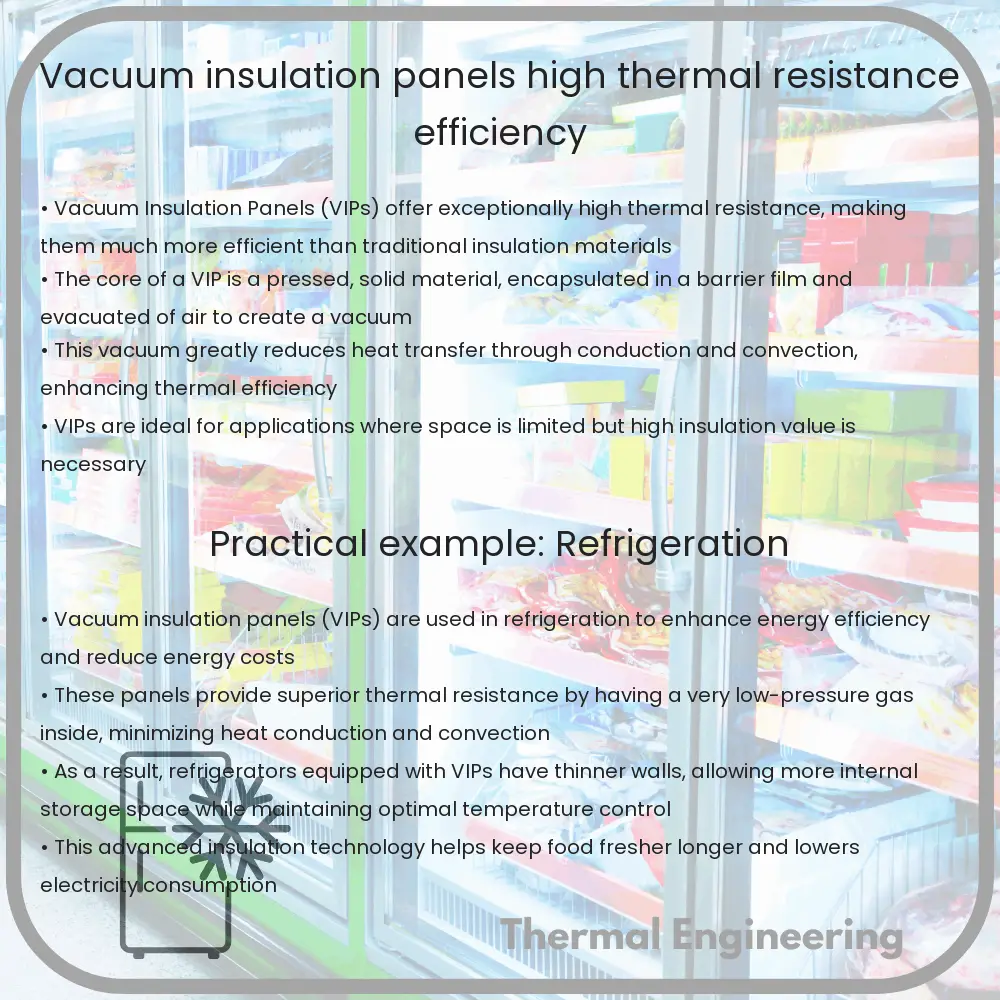
Vacuum Insulation Panels (VIPs) represent an advanced insulating technology that offers high thermal resistance in a thin form factor. These panels are significantly more effective than traditional insulation materials, making them ideal for applications where space is limited but energy efficiency is paramount.

Composition and Structure of VIPs

VIPs comprise a core material and a gas-tight envelope. The core material is often made from silica, polyurethane, or fiberglass, providing structural support and reducing heat transfer. This core is then encapsulated in a gas-impermeable envelope, typically constructed from metalized films or aluminum laminates to maintain a vacuum inside the panel.

How Vacuum Insulation Panels Work

The principle behind the efficiency of VIPs lies in the reduction of gas molecules within the panel. By creating a vacuum, these panels significantly reduce heat transfer by convection and conduction. The remaining heat transfer mainly occurs through radiation, which is also minimized using opacifiers integrated into the core material.

Thermal Performance

The thermal resistance of VIPs is quantified using the measure R-value, which indicates the material’s ability to resist heat flow. The higher the R-value, the better the insulating properties. VIPs can achieve R-values as high as R-50 per inch, substantially exceeding those of traditional insulation materials like fiberglass or foam, which typically offer R-values between R-3 to R-7 per inch.

Advantages of Vacuum Insulation Panels

  • Space Efficiency: VIPs provide superior insulation in a thinner profile compared to other materials, useful in appliances, shipping containers, and building constructions where space is at a premium.
  • Energy Efficiency: The high R-value of VIPs helps in maintaining temperature with minimal energy use, thereby reducing the operational costs in heating or cooling applications.
  • Reduced Thickness: Their slim profile enables integration into slender structures without compromising on insulation quality.

Challenges and Considerations

Despite their benefits, VIPs come with some considerations that need to be addressed:

  • Sensitivity to Puncture: If the vacuum seal is broken, the panel will lose its insulative property, reverting to the R-value of the core material alone.
  • Cost: Manufacturing VIPs is more complex than traditional insulation, reflecting in a higher upfront cost.
  • Lifespan and Durability: Over time, the vacuum inside the panels may degrade, thus reducing their effectiveness. Technologies and materials used for the barrier can improve lifespan, but this is an important factor for long-term planning and ROI calculations.

Applications of Vacuum Insulation Panels

VIPs are suited for applications demanding high insulation effectiveness with minimal space. Common examples include:

  • Refrigeration: Refrigerators and freezers use VIPs to enhance energy efficiency without increasing the appliance size.
  • Building and Construction: VIPs are used in building facades, roofs, and floors where space and energy efficiency are desired.
  • Transport: For shipping temperature-sensitive goods, VIPs provide excellent insulation properties, maintaining temperature reliability over long distances.

In conclusion, Vacuum Insulation Panels offer a compelling option for high-efficiency thermal insulation, especially in scenarios where space and performance are critical. While there are challenges associated with their use, ongoing improvements in material sciences may continue to enhance their viability and cost-effectiveness.