Facebook Instagram Youtube Twitter

How does a thermal overload protector work

Learn about thermal overload protectors, crucial for preventing equipment damage by monitoring and controlling excessive temperatures.

How does a thermal overload protector work

Understanding the Function of a Thermal Overload Protector

Thermal overload protectors are crucial components in various electrical and mechanical systems, safeguarding them from damage due to excessive heat. These devices are engineered to interrupt power or control signals when a critical temperature threshold is surpassed, thereby preventing potential failures and ensuring safety and longevity of equipment. This article explores the principles behind thermal overload protectors, how they work, and why they are essential in engineering systems.

Basic Principle of Operation

The primary function of a thermal overload protector is to monitor the temperature of a machine or an electrical circuit. These protectors are particularly useful in applications prone to overheating issues, such as motors, compressors, and transformers. When the system begins to operate beyond its temperature safety margin, the thermal overload protector triggers a mechanism that either interrupts the current or signals the system to shut down to prevent damage.

Types of Thermal Overload Protectors

There are several types of thermal overload protectors, each suited to different applications and operational mechanisms:

  • Bimetallic Strips: This type commonly utilizes a strip made from two different metals, each with a different coefficient of thermal expansion. When the temperature rises, the disparity in expansion rates causes the strip to bend. This bending action can break an electrical circuit, stopping the current flow and ceasing operation.
  • Thermocouple Devices: Often used in more complex systems, thermocouples measure the temperature directly and can provide feedback to a controller. This feedback is used to regulate or stop the operation of the machine when predetermined temperature thresholds are exceeded.

How Thermal Overload Protectors Enhance Safety and Efficiency

Thermal overload protectors play a significant role in maintaining the safety of electrical systems. By detecting and responding to temperature anomalies, they prevent the risk of fire or structural damage that could occur from overheating. Moreover, these devices enhance the efficiency of electrical devices by ensuring they operate within their optimal temperature ranges, thereby extending the lifespan of the components and reducing maintenance costs.

Whether in household appliances, industrial equipment, or automotive applications, the integration of thermal overload protectors is a testament to advances in safety and engineering practices. This allows consumers and industries alike to rely on their electrical systems with greater confidence, knowing that preventative measures are in place to handle thermal risks.

Conclusion

In conclusion, thermal overload protectors are essential devices in the engineering world, designed to detect high temperatures and prevent damage by interrupting the power supply. Understanding the types and functionalities of these devices helps in choosing the right protector for any specific application, ensuring both safety and operational efficiency.

By integrating thermal overload protection into systems, engineers and designers can significantly reduce the risk of equipment failure due to overheating, ensuring that machines operate safely at optimal conditions over extended periods. Thus, these protectors not only safeguard equipment but also contribute to sustainable engineering practices by minimizing the need for repairs and replacements.
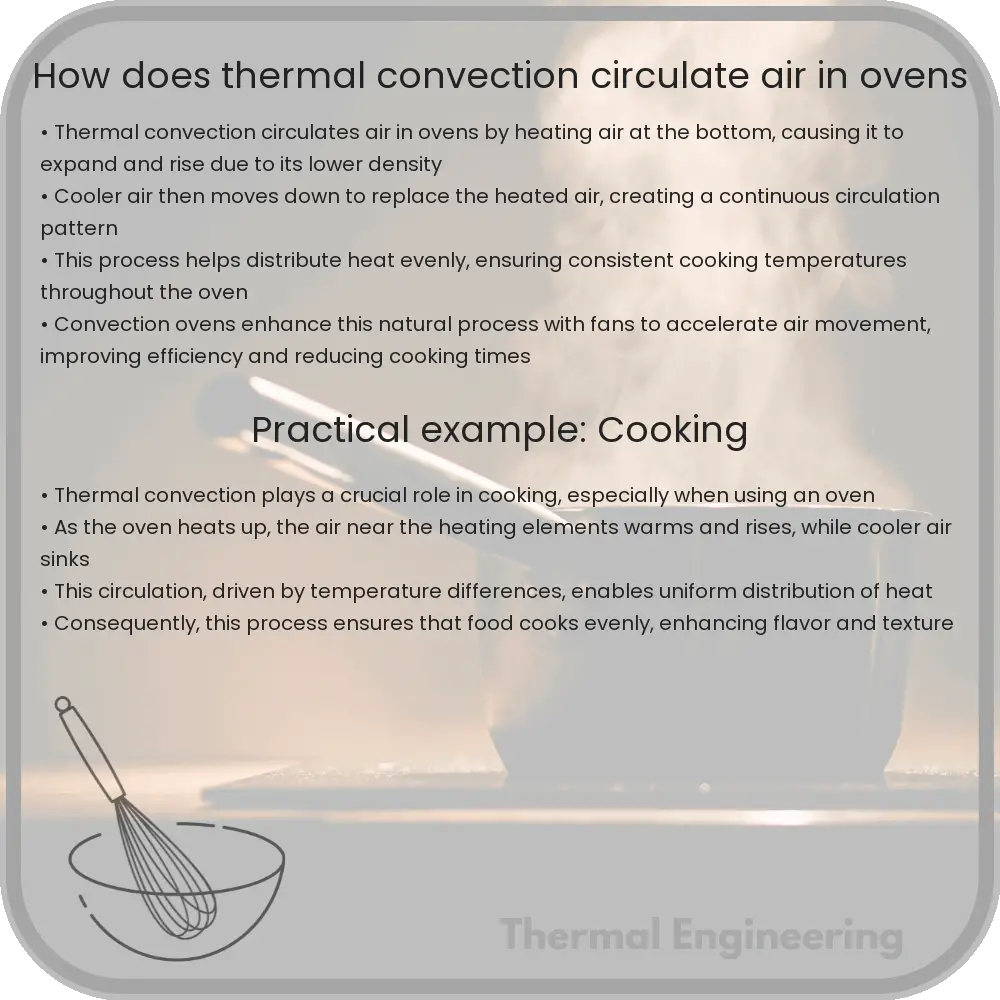
How does thermal convection circulate air in ovens

Learn how thermal convection works in ovens to evenly cook food through air circulation, enhancing cooking efficiency and uniformity.

How does thermal convection circulate air in ovens

Understanding Thermal Convection in Ovens

Have you ever wondered how an oven evenly cooks food? The secret lies in a process called thermal convection. This involves the movement of heat through air, efficiently distributing temperature within the oven’s chamber. But how exactly does this process work? This article will simplify the principles of thermal convection and explain its role in the operation of ovens.

What is Thermal Convection?

Thermal convection is a heat transfer process in which heat moves through a fluid (which can be a liquid or gas) due to the fluid’s movement caused by changes in its density. In the context of ovens, the fluid is the air inside the oven chamber. When air is heated, it expands and becomes less dense and lighter than the cooler air around it. This density difference causes the warmer, lighter air to rise and the cooler, denser air to sink. This cycle of rising and falling air currents results in a continuous circulation pattern known as a convection current.

How Convection Circulates Air in Ovens

In an oven, convection begins when the heating element, usually found at the bottom, heats the air directly above it. As this air warms up, it expands and rises to the top of the oven because it becomes lighter than the surrounding cooler air. Upon reaching the top, the air begins to cool and contract, becoming denser and sinking back towards the bottom of the oven.

Modern ovens often include a fan to enhance this natural convection process. The fan speeds up the circulation of the air, spreading the heat more rapidly and evenly throughout the oven. This is why convection ovens are particularly effective at achieving uniform cooking temperatures and reducing cook times.

Benefits of Convection in Ovens

  • Uniform Cooking: Convection ensures that hot air circulates throughout the oven, eliminating hot spots and ensuring that food cooks evenly.
  • Faster Cooking Times: Enhanced air circulation efficiently transfers heat to the food, often reducing cooking times.
  • Energy Efficiency: Due to reduced cooking times and even temperature distribution, convection ovens tend to be more energy-efficient than traditional ovens.

In summary, thermal convection plays a crucial role in the functioning of ovens, leveraging the natural tendency of hot air to rise and cool air to fall, thus creating a consistent and efficient heating environment. Whether you are baking a cake or roasting a turkey, understanding this process can help you optimize your oven settings for the best results.

With this knowledge, you’re better equipped to use your oven more effectively, ensuring that your culinary creations are not only delicious but perfectly cooked every time.

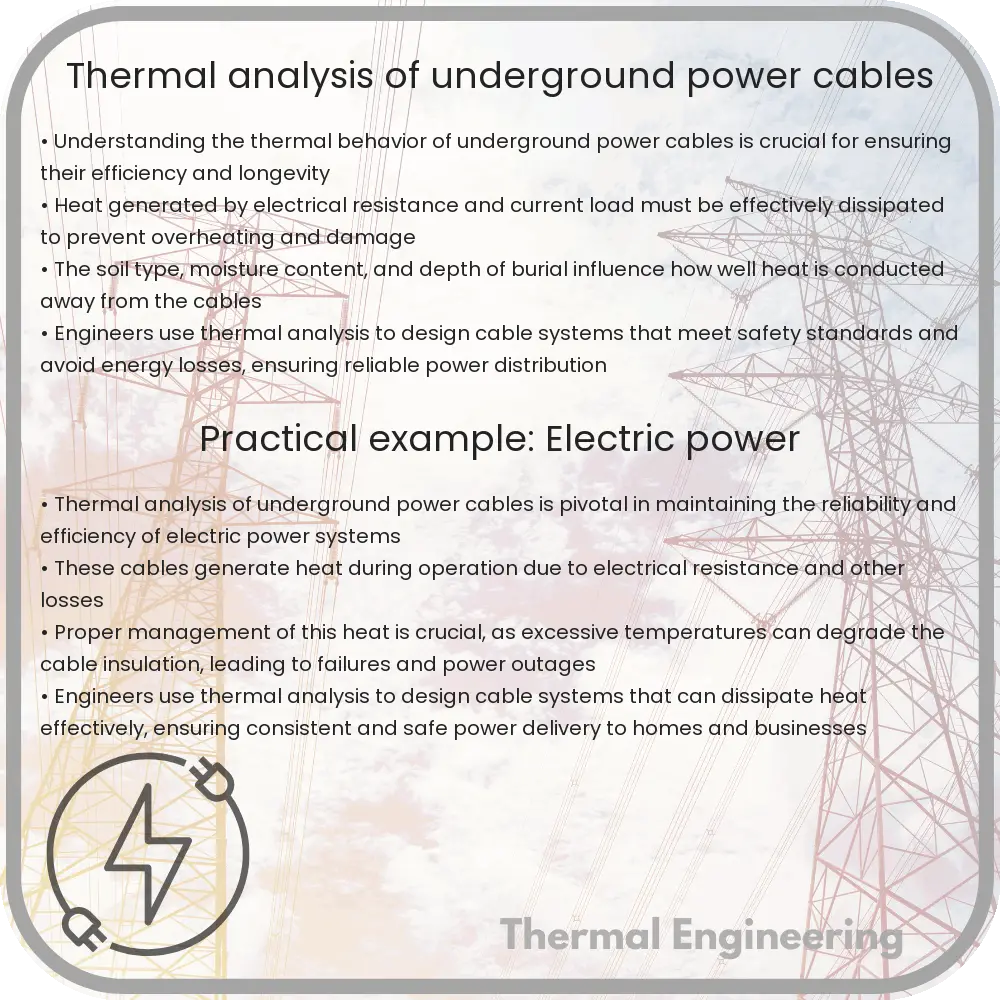
Thermal analysis of underground power cables

Learn about the techniques and importance of thermal analysis for underground power cables to ensure their efficiency, safety, and longevity.

Thermal analysis of underground power cables

Thermal Analysis of Underground Power Cables

Understanding the thermal behavior of underground power cables is crucial for ensuring their efficiency, longevity, and safety. As power cables distribute electricity, they inevitably generate heat due to electrical resistance. The ability of the surrounding environment to dissipate this heat determines the thermal stability of the cables. In this article, we will explore the basics of thermal analysis of underground power cables and its significance in engineering.

Factors Influencing Thermal Behavior

Several key factors influence the thermal performance of underground cables:

  • Conductor Material: The type of material used for the conductor affects its electrical and thermal conductivity. Common materials include copper and aluminum.
  • Insulation Type: The insulation material’s thermal resistance plays a crucial role in heat dissipation. Materials such as XLPE (cross-linked polyethylene) and EPR (ethylene propylene rubber) are commonly used.
  • Soil Characteristics: Soil thermal resistivity impacts the rate at which heat is conducted away from the cable. Factors such as moisture content, density, and type of soil influence its thermal resistivity.
  • Cable Depth: The depth at which cables are buried affects the thermal gradient and cooling conditions.
  • Ambient Temperature: The surrounding temperature, both seasonal and daily variations, also affects the operational temperature of the cables.

Heat Generation in Cables

The primary source of heat in power cables is the Joule heating effect, expressed typically as:

\[ Q = I^2 * R \]

where:

  • \(Q\) is the heat generated per unit time,
  • \(I\) is the current passing through the cable,
  • \(R\) is the electrical resistance of the conductor.

Understanding this heat generation is vital for determining the necessary specifications of underground cables to prevent overheating.

Thermal Modeling and Analysis Techniques

Engineers use various models and computational tools to simulate the thermal behavior of underground cables. These include:

  • Finite Element Analysis (FEA): A numerical method that simulates the physical behavior of the cables under various thermal conditions.
  • CFD (Computational Fluid Dynamics): Used to analyze and simulate how heat is dissipated in the soil surrounding the cables.

These models help in optimizing cable design by predicting temperature rise under different operating conditions and installation environments.

Importance of Thermal Analysis

Proper thermal analysis contributes significantly to the design and operation of underground power cables:

  • Safety: Prevents overheating, which could lead to insulation damage or failure, causing power outages or accidents.
  • Efficiency: Maintains optimal cable performance by ensuring temperatures remain within safe operational limits. This increases the longevity and reliability of the power transmission system.
  • Economic Impact: Efficient heat management can minimize maintenance costs and maximize the service life of underground cables.

In conclusion, thermal analysis is a fundamental aspect of the engineering and maintenance of underground power cables. By effectively managing the thermal characteristics, engineers can enhance the performance, durability, and safety of these essential components of our electrical distribution networks.

How do thermal imaging goggles work

Learn how thermal imaging goggles use infrared radiation to allow vision in the dark and their applications across various fields.

How do thermal imaging goggles work

Understanding Thermal Imaging Goggles

Thermal imaging goggles are a fascinating piece of technology that allow users to see variations in temperature in their environment, effectively providing vision in the dark. These devices are particularly useful in various fields such as military operations, firefighting, and wildlife observation. To understand how thermal imaging goggles work, it’s important to grasp some basic concepts of infrared radiation and thermal detection.

Key Components

The functionality of thermal imaging goggles depends heavily on their core components, which include an infrared sensor, a signal processing unit, and a display system. Here is how they collaborate to create a thermal image:

  • Infrared Sensor: At the heart of thermal imaging goggles is the infrared sensor. This sensor is designed to detect infrared energy (heat) emitting from objects in the vicinity. Different materials and temperatures emit different levels of infrared radiation.
  • Signal Processing Unit: The infrared sensor captures raw thermal data, which consists of various levels of infrared radiation. This raw data is then processed by the signal processing unit, which translates it into a usable format, typically a digital image.
  • Display System: Once the signal is processed, the thermal image is displayed to the user through an eyepiece or a screen. This image often appears in different colors representing various temperatures. Typically, warmer objects are depicted in reds and oranges, while cooler objects appear in blues and purples.

Principles of Operation

The core principle behind thermal imaging is the detection of infrared radiation. All objects emit some level of infrared radiation as a function of their temperature, according to the Stefan-Boltzmann law, which can be expressed as:

P = σ * A * T4

Where:

  • P is the power radiated per unit area,
  • σ (sigma) is the Stefan-Boltzmann constant (approximately 5.67 x 10⁻⁸ W/m2•K4),
  • A is the surface area, and
  • T is the absolute temperature in Kelvin.

As infrared radiation is generally invisible to the human eye, thermal imaging devices convert this radiation into a visible light spectrum image. This conversion is facilitated through the use of thermographic cameras within the goggles. These special cameras detect infrared radiation and create an image known as a “thermogram”. The thermogram is then transformed into electric impulses, interpreted by the goggles’ processor, and rendered as a visual image.

Applications of Thermal Imaging Goggles

Thermal imaging technology has a wide array of applications:

  • Military and Law Enforcement: In covert operations and night-time surveillance, thermal imaging helps personnel detect hidden objects or individuals in complete darkness or through smoke-filled environments.
  • Firefighting: Firefighters use thermal imaging goggles to see through smoke, allowing them to locate the bases of fires, find trapped individuals, and navigate burning structures safely.
  • Wildlife Observation: Wildlife researchers utilize thermal imaging to study nocturnal animals, helping them observe these creatures without disturbing them or affecting their natural behavior.
  • Building Inspection: Thermal imaging can be used to identify heat leaks in buildings, particularly around windows and doors, making it a useful tool for energy efficiency assessments.

In conclusion, thermal imaging goggles represent a powerful tool which leverages the physics of infrared radiation. By converting invisible heat energy into a visual display, these goggles provide invaluable assistance in a range of professional and recreational fields, enhancing both safety and efficiency.

How does thermal paste improve heat dissipation

Learn about thermal paste, a critical substance used to enhance heat dissipation between computer components and coolers, ensuring optimal performance and longevity.

How does thermal paste improve heat dissipation

Understanding the Role of Thermal Paste in Heat Dissipation

Thermal paste, also known as thermal compound or thermal grease, plays a crucial role in the maintenance and efficiency of computer systems and other electronic devices. This article explores the reasons behind the use of thermal paste in improving heat dissipation, its composition, and how it effectively manages heat transfer from a device’s components to its cooling mechanisms.

What is Thermal Paste?

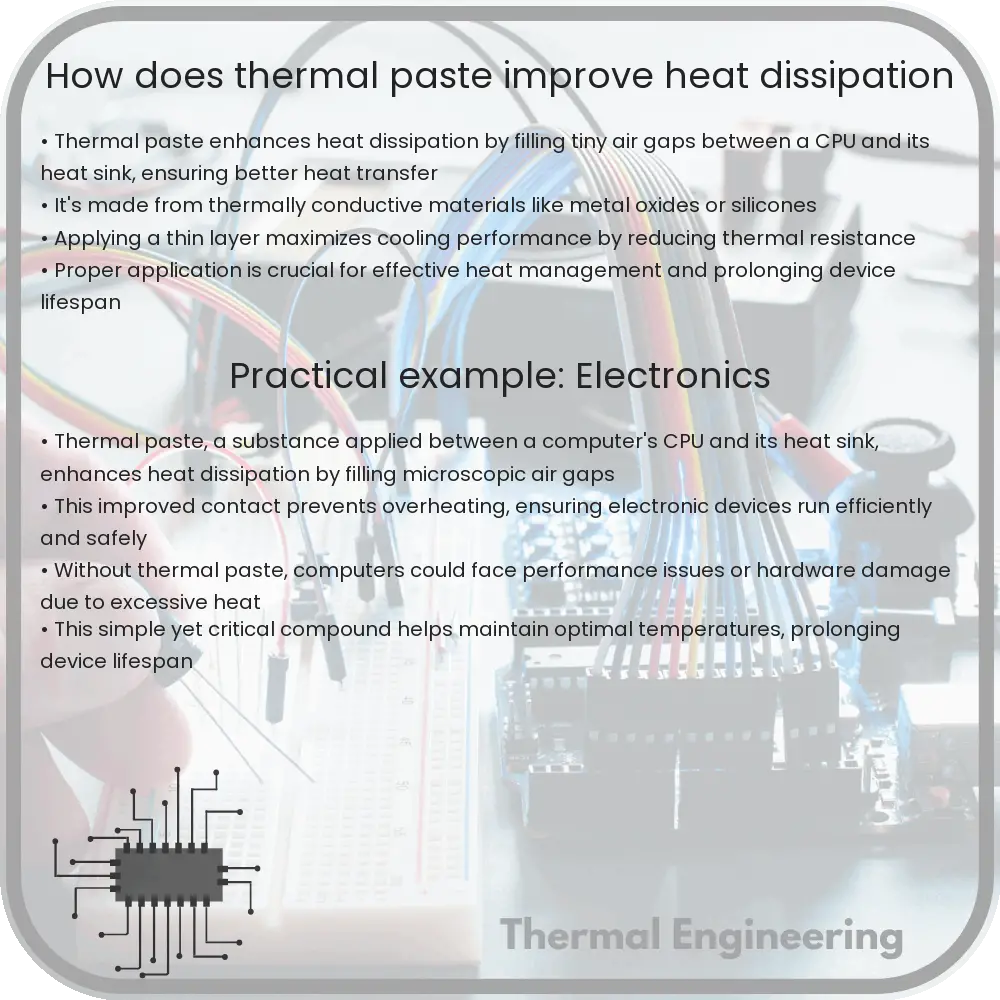
Thermal paste is a thermally conductive chemical compound, which is used as an interface between heat sources and heat sinks. Its primary function is to fill microscopic imperfections on the surfaces of the heat source (such as a CPU or GPU) and the heat sink. By doing this, the thermal paste eliminates air gaps or spaces from the interface area, as air is a poor conductor of heat and can greatly impede thermal efficiency.

Composition of Thermal Paste

The composition of thermal paste typically includes a mixture of compounds that possess high thermal conductivity. Common materials used in these mixtures include:

  • Metal oxides such as zinc oxide or aluminum oxide
  • Silicones
  • Graphite or carbon particles
  • Metal particles like silver or copper

Each of these materials is chosen for its ability to conduct heat effectively, ensuring faster and more efficient heat transfer from the heat source to the heat sink.

How Does Thermal Paste Improve Heat Dissipation?

The mechanism of heat transfer in the presence of thermal paste can be understood through basic principles of heat conduction. The thermal conductivity of the materials involved plays a key role. The formula for heat transfer by conduction is given by:

Q = (k * A * ΔT) / d

where:

  • Q is the amount of heat transferred,
  • k is the thermal conductivity of the material,
  • A is the area through which heat is being transferred,
  • ΔT is the temperature difference across the material,
  • d is the thickness of the material.

In this equation, the higher the thermal conductivity (k), the greater the heat transfer. Thermal paste replaces the less conductive air (which has a thermal conductivity of about 0.024 W/mK) with a substance that has a much higher thermal conductivity (generally about 1-10 W/mK depending on the composition), thus significantly enhancing heat dissipation.

Application and Effectiveness

Applying thermal paste is a critical step in building or maintaining computers and other devices where heat generation could affect performance. The paste should be applied in a thin, even layer on the surface of the component before attaching the heat sink. This ensures optimal heat transfer and helps prevent overheating, which can lead to hardware malfunctions or failures.

The effectiveness of thermal paste in improving heat dissipation has been substantiated through various studies and practical applications in electronic device manufacturing and maintenance. By enhancing the thermal interface between heat-generating components and coolers, thermal paste not only prolongs the lifespan of the hardware but also boosts its performance.

In conclusion, the use of thermal paste is a simple yet essential step in managing the operational temperature of heat-intensive devices. Its ability to efficiently transfer heat away from critical components makes it an invaluable tool for those looking to enhance their system’s performance and reliability.

How does a thermal reactor reduce emissions

Learn about thermal reactors, a crucial component in reducing vehicle emissions by promoting more complete combustion of exhaust gases.

How does a thermal reactor reduce emissions

Understanding How a Thermal Reactor Reduces Emissions

In the quest to reduce harmful emissions from internal combustion engines, engineering solutions such as the thermal reactor play a critical role. Primarily found in automotive emission control systems, the thermal reactor is designed to promote more complete combustion of exhaust gases, thus reducing the amount of pollutants released into the environment.

What is a Thermal Reactor?

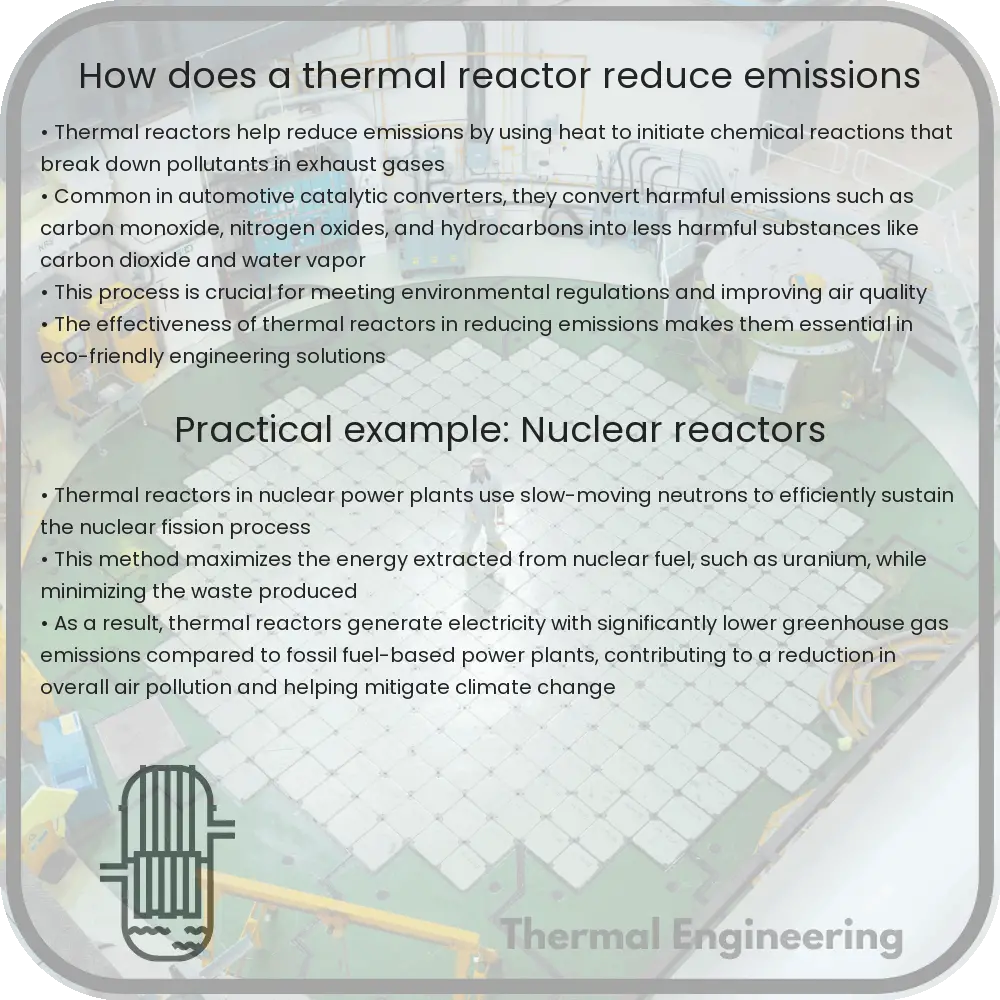
A thermal reactor is a component used in the exhaust system of an engine. Its design leverages the principles of heat and oxidation to break down harmful exhaust pollutants into less harmful substances before they are emitted into the air. The reactor operates at high temperatures, which accelerate the chemical reactions necessary for this conversion process.

How Does It Work?

The thermal reactor functions by increasing the temperature of the exhaust gases. This is done by either using the heat of the engine’s exhaust or through additional heating elements. The high temperatures enhance the oxidation of unburnt hydrocarbons (HC) and carbon monoxide (CO), two of the primary pollutants in engine exhaust.

  • Oxidation of Carbon Monoxide: Carbon monoxide is a colorless, odorless gas that can be deadly in high concentrations. It is produced from the incomplete combustion of fuel. In a thermal reactor, carbon monoxide is oxidized to carbon dioxide (CO2) according to the reaction 2 CO + O2 → 2 CO2.
  • Oxidation of Unburnt Hydrocarbons: Hydrocarbons are organic compounds made up of hydrogen and carbon. They are a major component of fuel but can be harmful if emitted into the atmosphere. In the thermal reactor, hydrocarbons are oxidized to form water (H2O) and carbon dioxide (CO2), facilitated by the reaction CnH2n+2 + (1.5n + 0.5) O2 → n CO2 + (n + 1) H2O.

Benefits of Using a Thermal Reactor

The utilization of thermal reactors in vehicles brings about several environmental benefits:

  • Reduction in Smog Formation: By converting CO and HC into CO2 and H2O, thermal reactors help reduce the formation of ground-level ozone, a key component of smog.
  • Improved Air Quality: Lower emissions of harmful substances contribute to overall better air quality, which is beneficial for public health and the environment.
  • Compliance with Emission Standards: Many countries have strict regulations regarding vehicle emissions. Utilizing a thermal reactor helps manufacturers meet these stringent standards.

While thermal reactors are effective in reducing certain types of emissions, they are often used in combination with other technologies such as catalytic converters to achieve even cleaner exhaust systems. This integrated approach allows for the effective control of a broader range of exhaust pollutants under various operating conditions.

Challenges and Considerations

Despite their benefits, there are several challenges associated with thermal reactors:

  • Fuel Efficiency: The higher operating temperatures can lead to increased fuel consumption, as some of the energy that could be used for propulsion is diverted to maintain the temperature of the reactor.
  • Engine Wear: High temperatures can accelerate the wear and tear on engine components, potentially leading to more frequent maintenance requirements and reduced engine lifespan.

In conclusion, while thermal reactors are a useful engineering solution for reducing automotive emissions, they need to be carefully managed and often used in conjunction with other technologies to optimize both performance and environmental impact. The continuous evolution of emission control technologies shows the potential for even greater efficiencies and reductions in pollutants in the future.

How does a thermodynamic vent system work

Learn about thermodynamic vent systems, their key functions, components, and their critical role in maintaining industrial safety.

How does a thermodynamic vent system work

Understanding the Thermodynamic Vent System

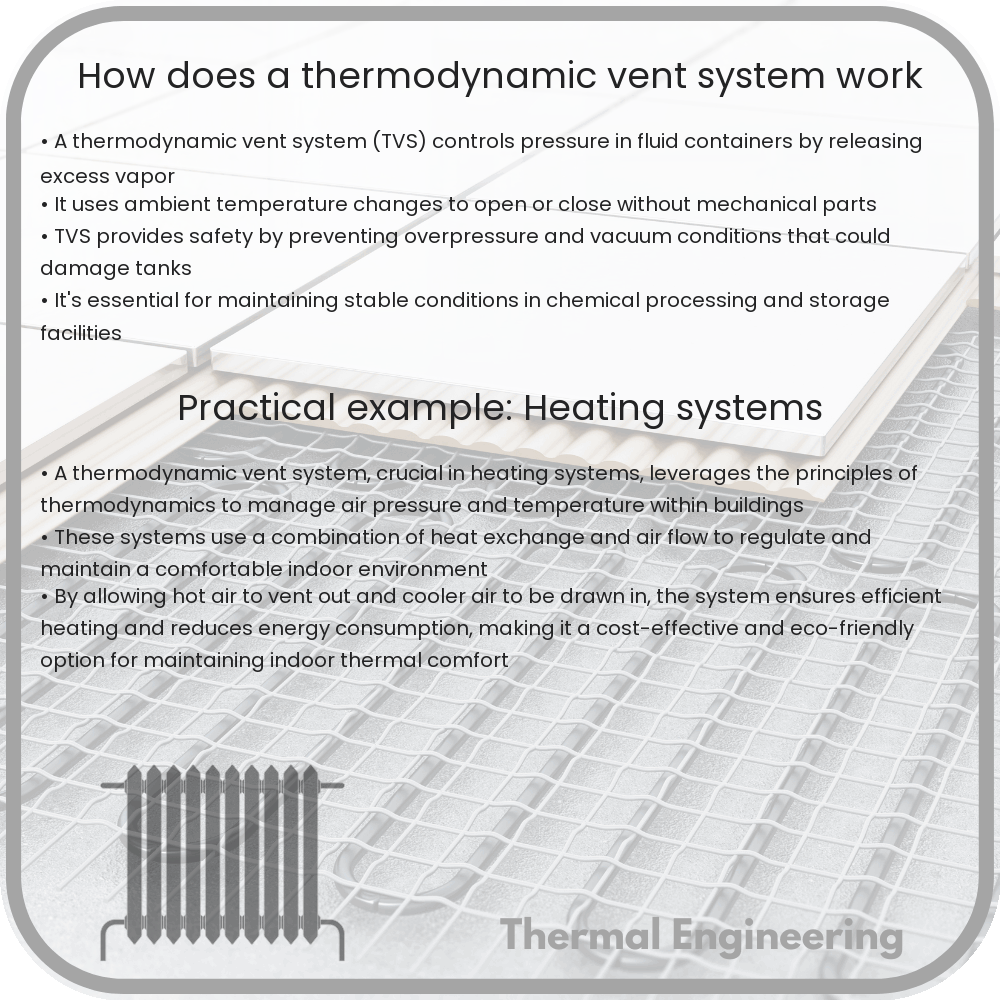
Thermodynamic vent systems play a crucial role in managing pressure within storage tanks that contain volatile liquids. These systems are designed to safely release pressure and prevent vacuum conditions that can lead to structural damage or catastrophic failure. This article explores how thermodynamic vent systems work, their components, and their importance in industrial applications.

Components of a Thermodynamic Vent System

A typical thermodynamic vent system includes several key components:

  • Pressure Relief Valve: This valve automatically opens at a preset pressure level to allow excess gas or vapor to escape, thereby preventing overpressure conditions.
  • Vacuum Relief Valve: Conversely, this valve opens when the internal pressure drops below atmospheric pressure, allowing air to enter the tank and prevent a vacuum.
  • Flame Arrester: A safety device that stops the propagation of a flame from external sources into the tank, mitigating the risk of explosions.
  • Pilot-Operated Valve: Often used in conjunction with the pressure relief valve, it enhances the accuracy and reliability of the system by using system pressure to control the operation of the valve.

How Does It Work?

Thermodynamic vent systems function based on the principles of thermodynamics, particularly concerning the behavior of gases under different temperatures and pressures. Here’s how it works:

  1. Pressure Build-Up: As the temperature inside a storage tank increases, whether from external heat sources or exothermic reactions, the pressure of the gas or vapor inside the tank also increases.
  2. Activation of Pressure Relief Valve: Once the pressure reaches a predetermined threshold, the pressure relief valve opens, allowing the excess gas or vapor to escape. This release helps to normalize the pressure inside the tank.
  3. Maintaining Structural Integrity: By relieating the internal pressure, the system protects the tank from potential damage or rupture that could occur if the pressure were allowed to exceed the tank’s design limits.
  4. Prevention of Vacuum Conditions: If the tank is emptied rapidly or cools down, the internal pressure can drop below the atmospheric pressure. The vacuum relief valve will open to allow air into the tank, balancing the pressure and preventing structural collapse.

Importance in Industrial Applications

Thermodynamic vent systems are indispensable in industries where large volumes of volatile liquids or gases are stored and processed. These include:

  • Petroleum refining and storage
  • Chemical manufacturing
  • Pharmaceutical plants
  • Agricultural product storage

Without these systems, the storage tanks could be subject to extreme fluctuations in pressure due to changes in temperature, composition, or phase of the contained substances, leading to potential safety hazards.

Conclusion

Thermodynamic vent systems are a critical component in maintaining the safety and efficiency of industrial operations involving volatile substances. By understanding and applying the principles of thermodynamics, these systems effectively manage the pressures within tanks to prevent damage and ensure operational continuity.

How does a thermal diffuser spread heat evenly

Learn about thermal diffusers, key HVAC components that promote even heat distribution for improved comfort and energy efficiency.

How does a thermal diffuser spread heat evenly

Understanding Thermal Diffusers

Thermal diffusers are essential components in various heating, ventilating, and air conditioning (HVAC) systems, ensuring that heat is evenly distributed across a given space. By promoting uniform temperature distribution, thermal diffusers enhance comfort and energy efficiency. This article will explore the function of thermal diffusers, how they work, and their significance in maintaining a balanced indoor environment.

What is a Thermal Diffuser?

A thermal diffuser, often simply called a diffuser, is a device designed to spread heat evenly in a room or an enclosure. It is typically a part of an air conditioning, heating, or ventilation system. Diffusers function by dispersing air in desired directions and at appropriate velocities and temperatures. The design and placement of a thermal diffuser are critical in achieving an efficient and uniform air distribution.

How Does a Thermal Diffuser Work?

The foremost task of a thermal diffuser is to manage the way air is introduced into a space. Here’s a breakdown of its working mechanism:

  • Air Supply: Thermal diffusers receive air that has been heated or cooled by HVAC equipment.
  • Dispersion: They disperse this air throughout the room. The design of the diffuser plays a critical role in determining the pattern, speed, and spread of the discharged air.
  • Enhanced Mixing: Efficient thermal diffusers enhance the mixing of the incoming air with the existing room air. By optimizing air mixing, the temperature within the room becomes more uniform, eliminating hot or cold spots.

Design Factors Influencing Thermal Diffusion

Several key design elements of a thermal diffuser affect its performance:

  1. Vane Design: Vanes or blades in a diffuser help direct air flow. Adjustable vanes can offer versatility in controlling air flow direction and spread depending on seasonal needs or specific room requirements.
  2. Size and Shape: The size and shape of the diffuser must correspond to the room’s size and the HVAC system’s capacity to achieve effective heat distribution.
  3. Placement: Proper placement ensures optimal air distribution and prevents issues like stratification or drafts, contributing to uniform temperature throughout the space.

Importance of Even Heat Distribution

Even distribution of heat is crucial for several reasons:

  • Comfort: Uniformly distributed temperatures ensure comfort for occupants throughout the space, avoiding areas that are too hot or too cold.
  • Energy Efficiency: By efficiently distributing air, thermal diffusers help maintain the desired temperature using less energy, thereby reducing utility costs and environmental impact.
  • Air Quality: Good air distribution also improves indoor air quality by ensuring adequate ventilation and minimizing dead zones where airborne contaminants can accumulate.

Conclusion

Thermal diffusers play a pivotal role in the effectiveness of HVAC systems. Their ability to spread heat evenly is not just a matter of enhancing comfort but also improving energy efficiency and air quality. Understanding how thermal diffusers work highlights their significance in creating sustainable and pleasant indoor environments. Engineers and designers continuously refine diffuser technology to adapt to evolving architectural styles and energy standards, ensuring that these systems meet future needs as efficiently as possible.

How do heat recovery systems reclaim energy

Learn how heat recovery systems enhance energy efficiency by reclaiming waste heat in various industries and HVAC applications.

How do heat recovery systems reclaim energy

Understanding Heat Recovery Systems

Heat recovery systems are an integral part of modern engineering that help improve energy efficiency by reclaiming heat that would otherwise be lost in industrial processes or during the heating, ventilating, and air conditioning (HVAC) of buildings. This article explains how these systems work and the principles behind their operation.

What is a Heat Recovery System?

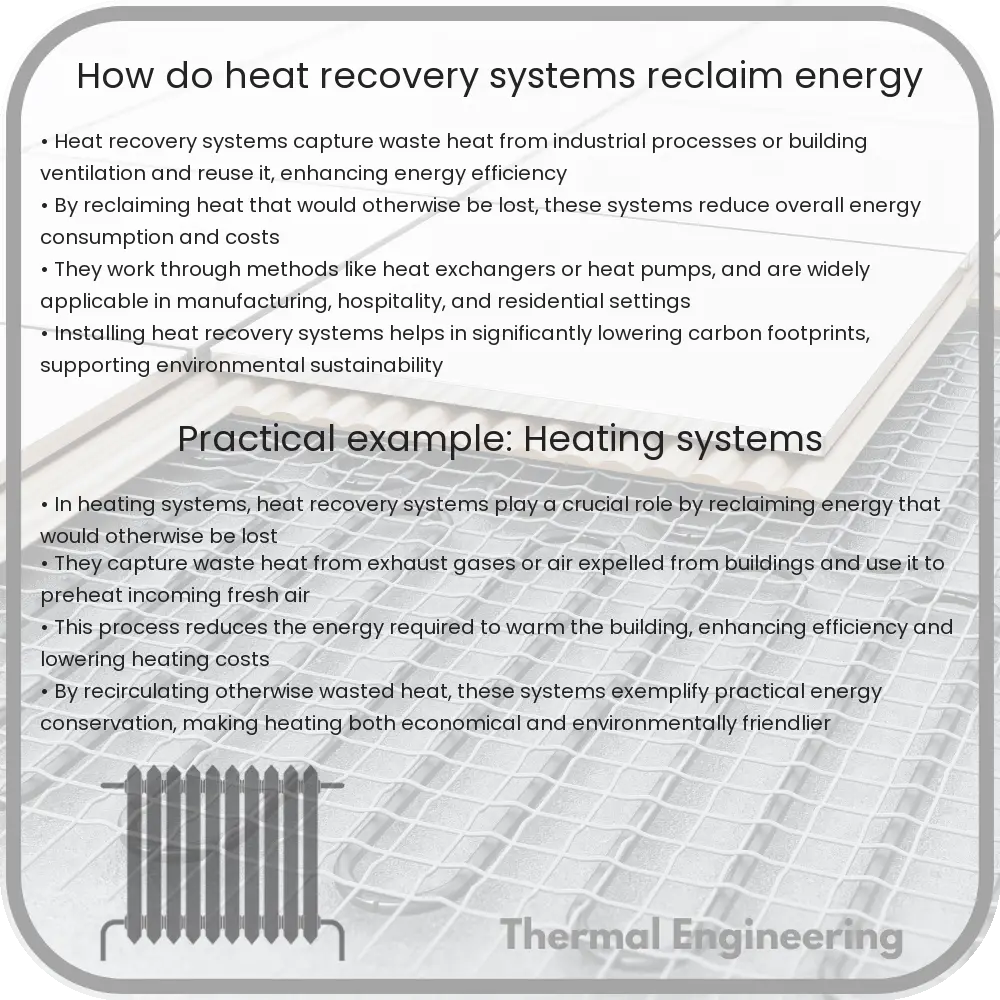
A heat recovery system captures residual heat that would typically be expelled into the environment as waste from processes or equipment. It then recycles this heat for other purposes, which may include heating air or water, thus reducing the overall energy consumption and improving the efficiency of the thermal system.

Types of Heat Recovery Systems

  • Heat Exchangers: Used in both industrial and HVAC applications, heat exchangers transfer heat from a fluid (liquid or gas) that is at a higher temperature to another at a lower temperature without the two mixing directly.
  • Heat Recovery Ventilation (HRV): Common in residential and commercial buildings, HRVs transfer heat from outgoing stale air to incoming fresh air during the ventilation process.
  • Energy Recovery Ventilation (ERV): Similar to HRVs, ERVs also capture moisture along with heat, thereby improving both the energy and humidity efficiency of the system.

How Do Heat Recovery Systems Work?

At the core of most heat recovery systems is the principle of heat transfer. Here are the steps typically involved:

  1. Capturing Waste Heat: The system begins by capturing excess heat from a process or exhaust system, which would otherwise be lost to the environment. This is often facilitated by some form of heat exchanger.
  2. Transfer of Heat: The captured heat is then transferred to the recovery system. Depending on the type of system, this might involve direct or indirect contact between the heat source and the heat sink.
  3. Utilization of Recovered Heat: After the heat is transferred to the heat sink, it is then utilized to preheat fresh air or cold inlet streams in industrial processes or HVAC systems, reducing the need for additional energy to heat them up to the required temperature.

Applications of Heat Recovery Systems

Heat recovery systems find applications across a broad spectrum of industries as well as in residential and commercial buildings:

  • Industrial: In industries, these systems can significantly reduce energy costs by recovering heat from furnace gases, boiler flue gases, and other waste streams.
  • Built Environment: In residential and commercial buildings, recovering heat from exhaust air can extensively cut heating costs and also help in maintaining adequate indoor air quality.
  • Power Plants: In thermal power plants, heat recovery systems can maximize efficiency by capturing and reusing the heat from exhaust steam in the cooling towers.

Economic and Environmental Impact

Implementing heat recovery systems can lead to substantial economic savings and environmental benefits. By reducing the demand for energy through the re-use of waste heat, these systems decrease fuel consumption, hence lowering greenhouse gas emissions and other pollutants. Moreover, the financial savings from reduced energy costs often pay back the initial investment in the heat recovery equipment within a few years.

Conclusion

In conclusion, heat recovery systems are vital tools in the quest for energy efficiency across various sectors. By understanding and deploying these systems, engineers can dramatically reduce energy consumption and environmental impact, creating a more sustainable future.

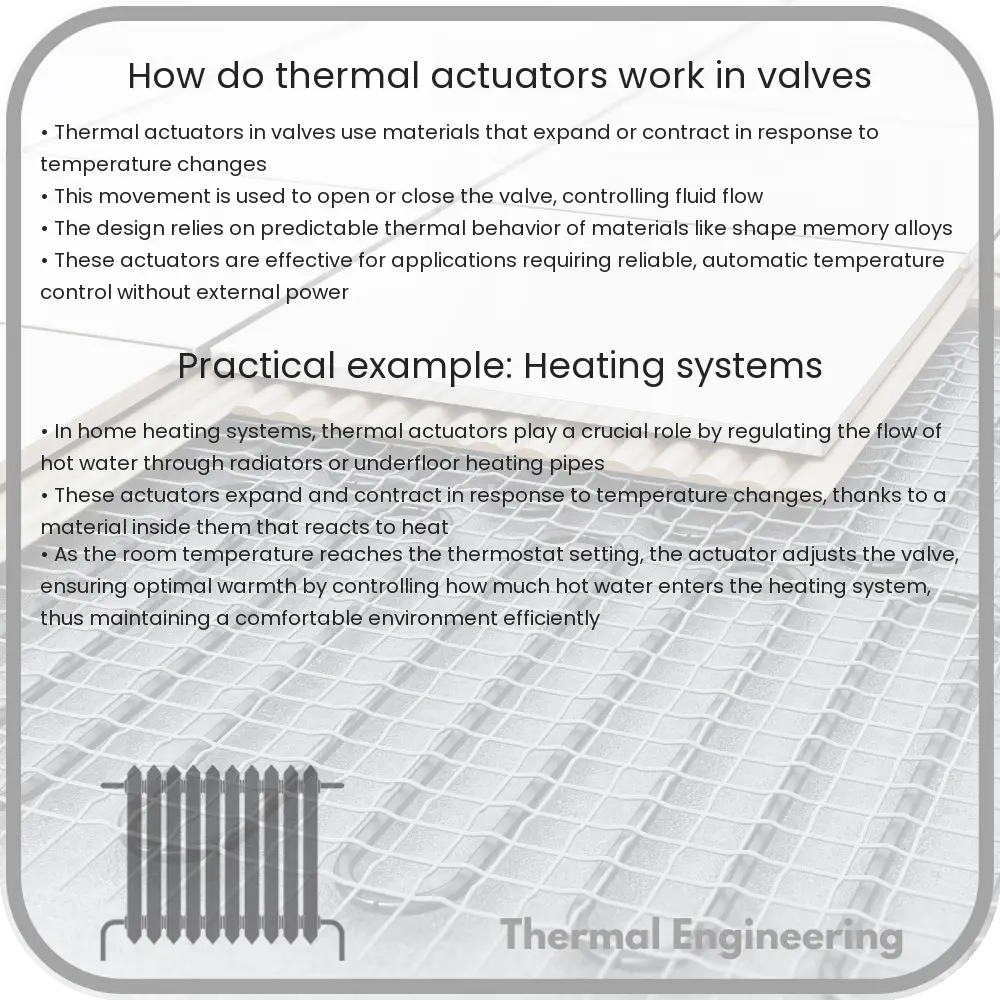
How do thermal actuators work in valves

Learn about thermal actuators, their working principles, types, applications, advantages, and limitations in valve operations.

How do thermal actuators work in valves

Understanding Thermal Actuators in Valves

Thermal actuators are crucial components used in various engineering systems, playing a key role in controlling the operation of valves. These actuators use thermal energy to produce movement, which in turn controls the flow of liquids or gases through the valves. This article explores the basic working principle of thermal actuators, their types, applications, advantages, and limitations.

Working Principle of Thermal Actuators

The basic principle behind thermal actuators relies on the thermal expansion of materials. As materials are heated, they expand; as they cool, they contract. A thermal actuator converts this dimensional change into useful mechanical force or motion.

Specifically, a thermal actuator consists of a temperature-sensitive material and a mechanical component to convert the thermal expansion into motion. Commonly, materials such as wax or shape memory alloys are used, known respectively for their significant expansion properties and precision in returning to original shapes upon cooling.

Types of Thermal Actuators

  1. Wax Type: Often used in plumbing and HVAC systems, wax actuators contain a wax pellet that expands upon heating. The expansion pushes a piston or rod, thus changing the position of the valve.
  2. Shape Memory Alloy Type: These actuators use alloys like Nitinol, which revert to a predetermined shape when heated. This characteristic can be harnessed to actuate the valve on changing temperatures.

Applications of Thermal Actuators

Thermal actuators are widely used in applications that require reliable and automatic temperature control. Some noteworthy applications include:

  • Thermostatic mixing valves in plumbing systems to control the water temperature.
  • Temperature control valves in automotive radiators and spacecraft temperature regulation systems.
  • Ventilation control systems in buildings for energy-efficient heating, ventilation, and air conditioning.

Advantages of Thermal Actuators

Thermal actuators offer several distinct advantages:

  • Simplicity and Reliability: With fewer moving parts compared to other actuators, thermal actuators are less prone to mechanical failure.
  • Energy Efficiency: They require no external power source or control signal, operating solely by the thermal input.
  • Cost-Effectiveness: Typically less expensive to manufacture and maintain than other types of actuators.

Limitations of Thermal Actuators

Despite their advantages, there are some limitations:

  • Slow Response: The time it takes for the material to heat up and cool down can result in slower response times compared to electrical or pneumatic actuators.
  • Limited Force: The force generated by thermal actuators is generally lower, which may not be suitable for large scale or heavy-duty applications.
  • Temperature Dependence: Their operation highly depends on ambient temperature, which can be a limitation in extremely cold or variable environments.

In conclusion, thermal actuators play an essential role in systems requiring automated temperature-dependent control of valves. By understanding their operation, engineers can better integrate these devices into appropriate applications, optimizing system efficiency and performance.