Facebook Instagram Youtube Twitter

What is Example of Energy of 1 Joule – Definition

One joule in everyday life and in science corresponds to approximately the kinetic energy of a 50 kg object (e.g. human) moving very slowly. Thermal Engineering

Energy Units

Energy is generally defined as the potential to do work or produce heat. This definition causes  the SI unit for energy is the same as the unit of work – the joule (J). Joule is a derived unit of energy and it is named in honor of James Prescott Joule and his experiments on the mechanical equivalent of heat. In more fundamental terms, 1 joule is equal to:

1 J = 1 kg.m2/s2

Since energy is a fundamental physical quantity and it is used in various physical and engineering branches, there are many energy units in physics and engineering.

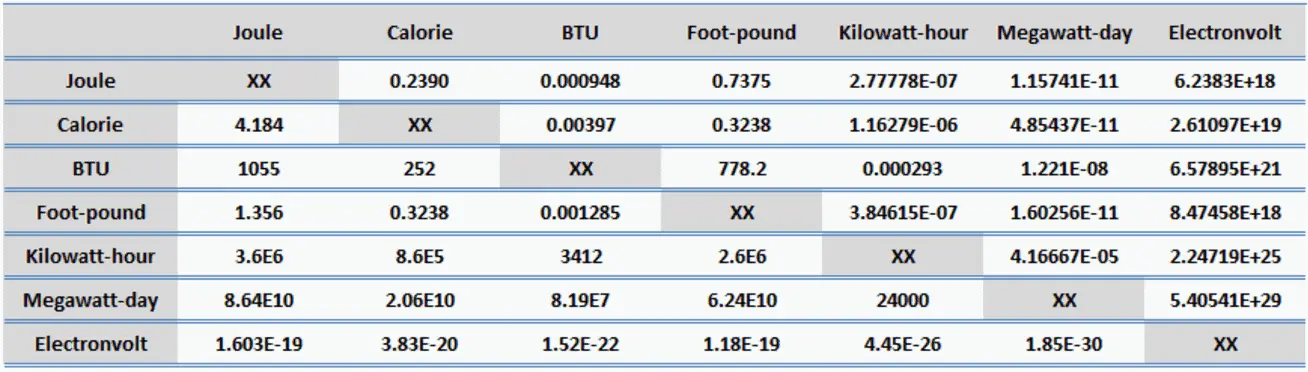
Joule – Energy Units

Joule (unit: J). Joule  is a derived unit of energy. It is equal to the energy transferred to an object when a force of one newton acts on that object in the direction of its motion through a distance of one metre.

  • 1 joule = 0.239 Calories
  • 1 joule = 9.48 x 10⁻⁴ BTU
  • 1 joule = 2.778 x 10⁻⁷ kWh

conversion - joule, calorie, kilowatthour - energy units

Examples of Energy of 1 Joule

One joule in everyday life and in science corresponds to approximately:

  • The kinetic energy of an object with mass 1 kg moving at √2 ≈ 1.4 m/s.
  • The kinetic energy of a 50 kg object (e.g. human) moving very slowly – approximately 0.72 km/h.
  • The energy required to lift a medium-size apple (100 g) 1 meter vertically from the surface of the Earth.
  • The heat required to raise the temperature of 1 g of water by 0.24 °C.
  • The heat required to evaporate of 0.00044 g of liquid water at 100°C.
  • The amount of electricity required to light a 1 watt LED for 1 s.
  • Is released by approximately 3.1⋅1010 fissions in a nuclear reactor.
 
References:
Reactor Physics and Thermal Hydraulics:
  1. J. R. Lamarsh, Introduction to Nuclear Reactor Theory, 2nd ed., Addison-Wesley, Reading, MA (1983).
  2. J. R. Lamarsh, A. J. Baratta, Introduction to Nuclear Engineering, 3d ed., Prentice-Hall, 2001, ISBN: 0-201-82498-1.
  3. W. M. Stacey, Nuclear Reactor Physics, John Wiley & Sons, 2001, ISBN: 0- 471-39127-1.
  4. Glasstone, Sesonske. Nuclear Reactor Engineering: Reactor Systems Engineering, Springer; 4th edition, 1994, ISBN: 978-0412985317
  5. Todreas Neil E., Kazimi Mujid S. Nuclear Systems Volume I: Thermal Hydraulic Fundamentals, Second Edition. CRC Press; 2 edition, 2012, ISBN: 978-0415802871
  6. Zohuri B., McDaniel P. Thermodynamics in Nuclear Power Plant Systems. Springer; 2015, ISBN: 978-3-319-13419-2
  7. Moran Michal J., Shapiro Howard N. Fundamentals of Engineering Thermodynamics, Fifth Edition, John Wiley & Sons, 2006, ISBN: 978-0-470-03037-0
  8. Kleinstreuer C. Modern Fluid Dynamics. Springer, 2010, ISBN 978-1-4020-8670-0.
  9. U.S. Department of Energy, THERMODYNAMICS, HEAT TRANSFER, AND FLUID FLOW. DOE Fundamentals Handbook, Volume 1, 2 and 3. June 1992.

See also:

Energy

We hope, this article, Example of Energy of 1 Joule, helps you. If so, give us a like in the sidebar. Main purpose of this website is to help the public to learn some interesting and important information about thermal engineering.
What is Pressure in Pressurized Water Reactor – Definition

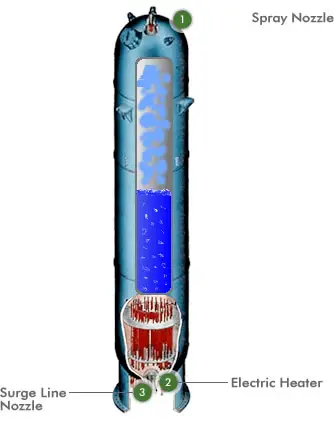
Pressure in the pressurized water reactor is maintained by a pressurizer, a separate vessel that is connected to the primary circuit and partially filled with water at saturation parameters. Thermal Engineering

Pressure in Pressurized Water Reactor

pressurizer
A pressurizer is a key component of PWRs.

Pressurized water reactors use a reactor pressure vessel (RPV) to contain the nuclear fuel, moderator, control rods and coolant. They are cooled and moderated by high-pressure liquid water (e.g. 16MPa). At this pressure water boils at approximately 350°C (662°F).  This high pressure is maintained by pressurizer. Inlet temperature of the water is about 290°C (554°F). The water (coolant) is heated in the reactor core to approximately 325°C (617°F) as the water flows through the core. As it can be seen, the reactor has approximately 25°C subcooled coolant (distance from the saturation).

A pressurizer is a component of a pressurized water reactor. Pressure in the primary circuit of PWRs is maintained by a pressurizer, a separate vessel that is connected to the primary circuit (hot leg) and partially filled with water which is heated to the saturation temperature (boiling point) for the desired pressure by submerged electrical heaters.

On the other hand there are spray lines to decrease pressure inside the pressurizer, which in turn causes decrease in pressure in reactor coolant system. These spray lines sprays reactor coolant from the cold leg of a loop into the steam space and condenses a portion of the steam. The quenching action reduces pressure and limits the pressure increases.

 
References:
Reactor Physics and Thermal Hydraulics:
  1. J. R. Lamarsh, Introduction to Nuclear Reactor Theory, 2nd ed., Addison-Wesley, Reading, MA (1983).
  2. J. R. Lamarsh, A. J. Baratta, Introduction to Nuclear Engineering, 3d ed., Prentice-Hall, 2001, ISBN: 0-201-82498-1.
  3. W. M. Stacey, Nuclear Reactor Physics, John Wiley & Sons, 2001, ISBN: 0- 471-39127-1.
  4. Glasstone, Sesonske. Nuclear Reactor Engineering: Reactor Systems Engineering, Springer; 4th edition, 1994, ISBN: 978-0412985317
  5. Todreas Neil E., Kazimi Mujid S. Nuclear Systems Volume I: Thermal Hydraulic Fundamentals, Second Edition. CRC Press; 2 edition, 2012, ISBN: 978-0415802871
  6. Zohuri B., McDaniel P. Thermodynamics in Nuclear Power Plant Systems. Springer; 2015, ISBN: 978-3-319-13419-2
  7. Moran Michal J., Shapiro Howard N. Fundamentals of Engineering Thermodynamics, Fifth Edition, John Wiley & Sons, 2006, ISBN: 978-0-470-03037-0
  8. Kleinstreuer C. Modern Fluid Dynamics. Springer, 2010, ISBN 978-1-4020-8670-0.
  9. U.S. Department of Energy, THERMODYNAMICS, HEAT TRANSFER, AND FLUID FLOW. DOE Fundamentals Handbook, Volume 1, 2 and 3. June 1992.

See also:

Pressure

We hope, this article, Pressure in Pressurized Water Reactor, helps you. If so, give us a like in the sidebar. Main purpose of this website is to help the public to learn some interesting and important information about thermal engineering.
What is Pressure in Condensing Steam Turbine – Definition

Typically most of nuclear power plants operates multi-stage condensing steam turbines. The high pressure steam have pressure of about 6 MPa. Thermal Engineering

Pressures in Condensing Steam Turbines

engineering thermodynamics
Rankine Cycle – Thermodynamics as Energy Conversion Science

Typically most of nuclear power plants operates multi-stage condensing steam turbines. In these turbines the high-pressure stage receives steam (this steam is nearly saturated steam – x = 0.995 – point C at the figure; 6 MPa; 275.6°C) from a steam generator and exhaust it to moisture separator-reheater (point D). The steam must be reheated in order to avoid damages that could be caused to blades of steam turbine by low quality steam. The reheater heats the steam (point D) and then the steam is directed to the low-pressure stage of steam turbine, where expands (point E to F). The exhausted steam is at a pressure well below atmospheric (absolute pressure of 0.008 MPa), and is in a partially condensed state (point F), typically of a quality near 90%.

See also: Wet Steam

See also: Steam Tables

 
References:
Reactor Physics and Thermal Hydraulics:
  1. J. R. Lamarsh, Introduction to Nuclear Reactor Theory, 2nd ed., Addison-Wesley, Reading, MA (1983).
  2. J. R. Lamarsh, A. J. Baratta, Introduction to Nuclear Engineering, 3d ed., Prentice-Hall, 2001, ISBN: 0-201-82498-1.
  3. W. M. Stacey, Nuclear Reactor Physics, John Wiley & Sons, 2001, ISBN: 0- 471-39127-1.
  4. Glasstone, Sesonske. Nuclear Reactor Engineering: Reactor Systems Engineering, Springer; 4th edition, 1994, ISBN: 978-0412985317
  5. Todreas Neil E., Kazimi Mujid S. Nuclear Systems Volume I: Thermal Hydraulic Fundamentals, Second Edition. CRC Press; 2 edition, 2012, ISBN: 978-0415802871
  6. Zohuri B., McDaniel P. Thermodynamics in Nuclear Power Plant Systems. Springer; 2015, ISBN: 978-3-319-13419-2
  7. Moran Michal J., Shapiro Howard N. Fundamentals of Engineering Thermodynamics, Fifth Edition, John Wiley & Sons, 2006, ISBN: 978-0-470-03037-0
  8. Kleinstreuer C. Modern Fluid Dynamics. Springer, 2010, ISBN 978-1-4020-8670-0.
  9. U.S. Department of Energy, THERMODYNAMICS, HEAT TRANSFER, AND FLUID FLOW. DOE Fundamentals Handbook, Volume 1, 2 and 3. June 1992.

See also:

Pressure

We hope, this article, Pressure in Condensing Steam Turbine, helps you. If so, give us a like in the sidebar. Main purpose of this website is to help the public to learn some interesting and important information about thermal engineering.

What is Critical Pressure of Water – Definition

At pressure, that is higher than the critical pressure of water, water is in special state, that is known as supercritical fluid state. Critical pressure is Pcr = 22.09 MPa. Thermal Engineering

Critical Pressure of Water

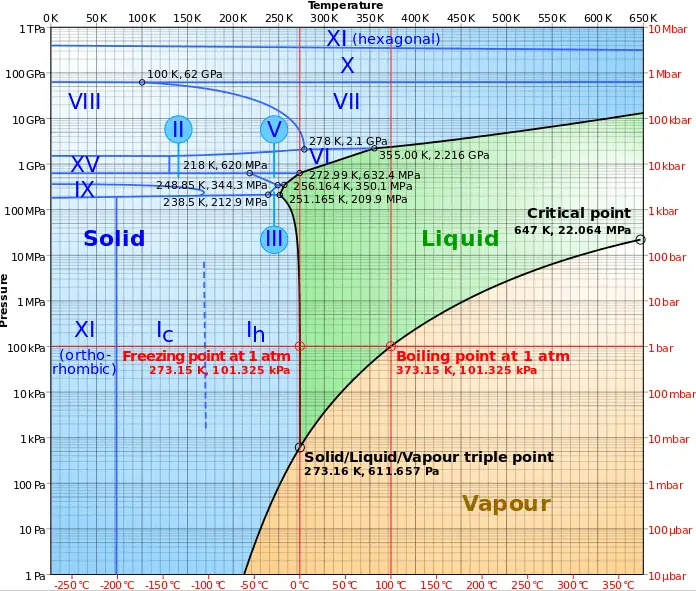
Phase diagram of water
Phase diagram of water.
Source: wikipedia.org CC BY-SA

At pressure, that is higher than the critical pressure,  water is in special state, that is known as supercritical fluid state. A supercritical fluid is a fluid that is at pressures higher than its thermodynamic critical values. At the critical and supercritical pressures a fluid is considered as a single-phase substance in spite of the fact that all thermophysical properties undergo significant changes within the critical and pseudocritical regions.

For water, the critical  parameters are the following:

  • Pcr = 22.09 MPa
  • Tcr = 374.14 °C (or 647.3 K)
  • vcr = 0.003155 m3/kg
  • uf = ug = 2014 kJ/kg
  • hf = hg = 2084 kJ/kg
  • sf = sg =4.406 kJ/kg K

See also: Critical Point of Water

See also: Supercritical Fluid

 
References:
Reactor Physics and Thermal Hydraulics:
  1. J. R. Lamarsh, Introduction to Nuclear Reactor Theory, 2nd ed., Addison-Wesley, Reading, MA (1983).
  2. J. R. Lamarsh, A. J. Baratta, Introduction to Nuclear Engineering, 3d ed., Prentice-Hall, 2001, ISBN: 0-201-82498-1.
  3. W. M. Stacey, Nuclear Reactor Physics, John Wiley & Sons, 2001, ISBN: 0- 471-39127-1.
  4. Glasstone, Sesonske. Nuclear Reactor Engineering: Reactor Systems Engineering, Springer; 4th edition, 1994, ISBN: 978-0412985317
  5. Todreas Neil E., Kazimi Mujid S. Nuclear Systems Volume I: Thermal Hydraulic Fundamentals, Second Edition. CRC Press; 2 edition, 2012, ISBN: 978-0415802871
  6. Zohuri B., McDaniel P. Thermodynamics in Nuclear Power Plant Systems. Springer; 2015, ISBN: 978-3-319-13419-2
  7. Moran Michal J., Shapiro Howard N. Fundamentals of Engineering Thermodynamics, Fifth Edition, John Wiley & Sons, 2006, ISBN: 978-0-470-03037-0
  8. Kleinstreuer C. Modern Fluid Dynamics. Springer, 2010, ISBN 978-1-4020-8670-0.
  9. U.S. Department of Energy, THERMODYNAMICS, HEAT TRANSFER, AND FLUID FLOW. DOE Fundamentals Handbook, Volume 1, 2 and 3. June 1992.

See also:

Pressure

We hope, this article, Critical Pressure of Water, helps you. If so, give us a like in the sidebar. Main purpose of this website is to help the public to learn some interesting and important information about thermal engineering.

What is Pressure Formula – Pressure Equation – Definition

Pressure Formula – Pressure Equation . Pressure is a measure of the force exerted per unit area on the boundaries of a substance. Thermal Engineering

Pressure Formula – Pressure Equation

manometer-pressure-measurementPressure is a measure of the force exerted per unit area on the boundaries of a substance. The standard unit for pressure in the SI system is the Newton per square meter or pascal (Pa). Mathematically (pressure formula):

p = F/A

where

  • p is the pressure
  • F is the normal force
  • A is the area of the boundary

Pascal is defined as force of 1N that is exerted on unit area.

  • 1 Pascal = 1 N/m2
However, for most engineering problems it is fairly small unit, so it is convenient to work with multiples of the pascal: the kPa, the bar, and the MPa.
  • 1 MPa  106 N/m2
  • 1 bar    105 N/m2
  • 1 kPa   103 N/m2

In general, pressure or the force exerted per unit area on the boundaries of a substance is caused by the collisions of the molecules of the substance with the boundaries of the system. As molecules hit the walls, they exert forces that try to push the walls outward. The forces resulting from all of these collisions cause the pressure exerted by a system on its surroundings. Pressure as an intensive variable is constant in a closed system. It really is only relevant in liquid or gaseous systems.

What is Pressure [xyz-ihs snippet=”pressure”]

Ideal Gas Law

Any equation that relates the pressure, temperature, and specific volume of a substance is called an equation of state. The simplest and best-known equation of state for substances in the gas phase is the Ideal Gas equation of state. It was first stated by Émile Clapeyron in 1834 as a combination of the empirical Boyle’s law, Charles’ law and Avogadro’s Law. This equation predicts the p-v-T behavior of a gas quite accurately for dilute or low-pressure gases. In an ideal gas, molecules have no volume and do not interact. According to the ideal gas law, pressure varies linearly with temperature and quantity, and inversely with volume.

pV = nRT

where:

  • p is the absolute pressure of the gas
  • n is the amount of substance
  • T is the absolute temperature
  • V is the volume
  • R  is the ideal, or universal, gas constant, equal to the product of the Boltzmann constant and the Avogadro constant,

In this equation the symbol R is a constant called the universal gas constant that has the same value for all gases—namely, R =  8.31 J/mol K.

The power of the ideal gas law is in its simplicity. When any two of the thermodynamic variables, p, v, and T are given, the third can easily be found. An ideal gas is defined as one in which all collisions between atoms or molecules are perfectly elastic and in which there are no intermolecular attractive forces. An ideal gas can be visualized as a collection of perfectly hard spheres which collide but which otherwise do not interact with each other. In reality, no real gases are like an ideal gas and therefore no real gases follow the ideal gas law or equation completely. At temperatures near a gases boiling point, increases in pressure will cause condensation to take place and drastic decreases in volume. At very high pressures, the intermolecular forces of a gas are significant. However, most gases are in approximate agreement at pressures and temperatures above their boiling point. The ideal gas law is utilized by engineers working with gases because it is simple to use and approximates real gas behavior.

 
References:
Reactor Physics and Thermal Hydraulics:
  1. J. R. Lamarsh, Introduction to Nuclear Reactor Theory, 2nd ed., Addison-Wesley, Reading, MA (1983).
  2. J. R. Lamarsh, A. J. Baratta, Introduction to Nuclear Engineering, 3d ed., Prentice-Hall, 2001, ISBN: 0-201-82498-1.
  3. W. M. Stacey, Nuclear Reactor Physics, John Wiley & Sons, 2001, ISBN: 0- 471-39127-1.
  4. Glasstone, Sesonske. Nuclear Reactor Engineering: Reactor Systems Engineering, Springer; 4th edition, 1994, ISBN: 978-0412985317
  5. Todreas Neil E., Kazimi Mujid S. Nuclear Systems Volume I: Thermal Hydraulic Fundamentals, Second Edition. CRC Press; 2 edition, 2012, ISBN: 978-0415802871
  6. Zohuri B., McDaniel P. Thermodynamics in Nuclear Power Plant Systems. Springer; 2015, ISBN: 978-3-319-13419-2
  7. Moran Michal J., Shapiro Howard N. Fundamentals of Engineering Thermodynamics, Fifth Edition, John Wiley & Sons, 2006, ISBN: 978-0-470-03037-0
  8. Kleinstreuer C. Modern Fluid Dynamics. Springer, 2010, ISBN 978-1-4020-8670-0.
  9. U.S. Department of Energy, THERMODYNAMICS, HEAT TRANSFER, AND FLUID FLOW. DOE Fundamentals Handbook, Volume 1, 2 and 3. June 1992.

See also:

Pressure

We hope, this article, Pressure Formula – Pressure Equation, helps you. If so, give us a like in the sidebar. Main purpose of this website is to help the public to learn some interesting and important information about thermal engineering.
What is Force and Pressure – Definition

In general, pressure or the force exerted per unit area on the boundaries of a substance is caused by the collisions of the molecules of the substance with the boundaries of the system. Thermal Engineering

What is Pressure

manometer-pressure-measurementForce and pressure are closely related. Pressure is a measure of the force exerted per unit area on the boundaries of a substance. The standard unit for pressure in the SI system is the Newton per square meter or pascal (Pa). Mathematically:

p = F/A

where

  • p is the pressure
  • F is the normal force
  • A is the area of the boundary

Pascal is defined as force of 1N that is exerted on unit area.

  • 1 Pascal = 1 N/m2
However, for most engineering problems it is fairly small unit, so it is convenient to work with multiples of the pascal: the kPa, the bar, and the MPa.
  • 1 MPa  106 N/m2
  • 1 bar    105 N/m2
  • 1 kPa   103 N/m2

In general, pressure or the force exerted per unit area on the boundaries of a substance is caused by the collisions of the molecules of the substance with the boundaries of the system. As molecules hit the walls, they exert forces that try to push the walls outward. The forces resulting from all of these collisions cause the pressure exerted by a system on its surroundings. Pressure as an intensive variable is constant in a closed system. It really is only relevant in liquid or gaseous systems.

What is Pressure [xyz-ihs snippet=”pressure”]
 
References:
Reactor Physics and Thermal Hydraulics:
  1. J. R. Lamarsh, Introduction to Nuclear Reactor Theory, 2nd ed., Addison-Wesley, Reading, MA (1983).
  2. J. R. Lamarsh, A. J. Baratta, Introduction to Nuclear Engineering, 3d ed., Prentice-Hall, 2001, ISBN: 0-201-82498-1.
  3. W. M. Stacey, Nuclear Reactor Physics, John Wiley & Sons, 2001, ISBN: 0- 471-39127-1.
  4. Glasstone, Sesonske. Nuclear Reactor Engineering: Reactor Systems Engineering, Springer; 4th edition, 1994, ISBN: 978-0412985317
  5. Todreas Neil E., Kazimi Mujid S. Nuclear Systems Volume I: Thermal Hydraulic Fundamentals, Second Edition. CRC Press; 2 edition, 2012, ISBN: 978-0415802871
  6. Zohuri B., McDaniel P. Thermodynamics in Nuclear Power Plant Systems. Springer; 2015, ISBN: 978-3-319-13419-2
  7. Moran Michal J., Shapiro Howard N. Fundamentals of Engineering Thermodynamics, Fifth Edition, John Wiley & Sons, 2006, ISBN: 978-0-470-03037-0
  8. Kleinstreuer C. Modern Fluid Dynamics. Springer, 2010, ISBN 978-1-4020-8670-0.
  9. U.S. Department of Energy, THERMODYNAMICS, HEAT TRANSFER, AND FLUID FLOW. DOE Fundamentals Handbook, Volume 1, 2 and 3. June 1992.

See also:

Pressure

We hope, this article, Force and Pressure, helps you. If so, give us a like in the sidebar. Main purpose of this website is to help the public to learn some interesting and important information about thermal engineering.
What is SI Unit of Pressure – Definition

SI Unit of Pressure – Pascal – kg/m.s2 – N/m2. The SI unit of pressure and stress is the pascal. A technical atmosphere is a non-SI unit of pressure equal to one kilogram-force per square centimeter. Thermal Engineering

What is Pressure

manometer-pressure-measurementPressure is a measure of the force exerted per unit area on the boundaries of a substance. The standard unit for pressure in the SI system is the Newton per square meter or pascal (Pa). Mathematically:

p = F/A

where

  • p is the pressure
  • F is the normal force
  • A is the area of the boundary

Pascal is defined as force of 1N that is exerted on unit area.

  • 1 Pascal = 1 N/m2
However, for most engineering problems it is fairly small unit, so it is convenient to work with multiples of the pascal: the kPa, the bar, and the MPa.
  • 1 MPa  106 N/m2
  • 1 bar    105 N/m2
  • 1 kPa   103 N/m2

In general, pressure or the force exerted per unit area on the boundaries of a substance is caused by the collisions of the molecules of the substance with the boundaries of the system. As molecules hit the walls, they exert forces that try to push the walls outward. The forces resulting from all of these collisions cause the pressure exerted by a system on its surroundings. Pressure as an intensive variable is constant in a closed system. It really is only relevant in liquid or gaseous systems.

What is Pressure [xyz-ihs snippet=”pressure”]

SI Unit of Pressure – Pascal – kg/m.s2

Pascal – Unit of Pressure

As was discussed, the SI unit of pressure and stress is the pascal.

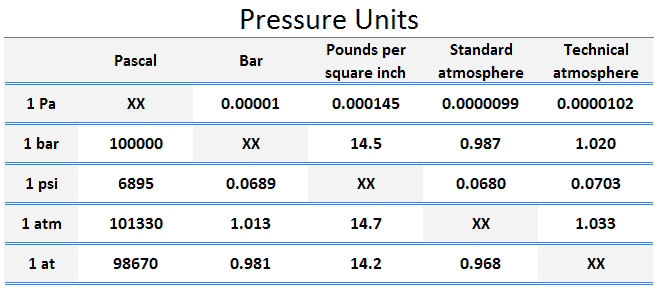
  • 1 pascal  1 N/m2 = 1 kg / (m.s2)

Pascal is defined as one newton per square metre. However, for most engineering problems it is fairly small unit, so it is convenient to work with multiples of the pascal: the kPa, the bar, and the MPa.

  • 1 MPa  106 N/m2
  • 1 bar    105 N/m2
  • 1 kPa   103 N/m2

The unit of measurement called standard atmosphere (atm) is defined as:

  • 1 atm = 101.33 kPa

The standard atmosphere approximates to the average pressure at sea-level at the latitude 45° N. Note that, there is a difference between the standard atmosphere (atm) and the technical atmosphere (at).

A technical atmosphere is a non-SI unit of pressure equal to one kilogram-force per square centimeter.

  • 1 at = 98.67 kPa

Table - Conversion between pressure units - pascal, bar, psi, atmosphere

 
References:
Reactor Physics and Thermal Hydraulics:
  1. J. R. Lamarsh, Introduction to Nuclear Reactor Theory, 2nd ed., Addison-Wesley, Reading, MA (1983).
  2. J. R. Lamarsh, A. J. Baratta, Introduction to Nuclear Engineering, 3d ed., Prentice-Hall, 2001, ISBN: 0-201-82498-1.
  3. W. M. Stacey, Nuclear Reactor Physics, John Wiley & Sons, 2001, ISBN: 0- 471-39127-1.
  4. Glasstone, Sesonske. Nuclear Reactor Engineering: Reactor Systems Engineering, Springer; 4th edition, 1994, ISBN: 978-0412985317
  5. Todreas Neil E., Kazimi Mujid S. Nuclear Systems Volume I: Thermal Hydraulic Fundamentals, Second Edition. CRC Press; 2 edition, 2012, ISBN: 978-0415802871
  6. Zohuri B., McDaniel P. Thermodynamics in Nuclear Power Plant Systems. Springer; 2015, ISBN: 978-3-319-13419-2
  7. Moran Michal J., Shapiro Howard N. Fundamentals of Engineering Thermodynamics, Fifth Edition, John Wiley & Sons, 2006, ISBN: 978-0-470-03037-0
  8. Kleinstreuer C. Modern Fluid Dynamics. Springer, 2010, ISBN 978-1-4020-8670-0.
  9. U.S. Department of Energy, THERMODYNAMICS, HEAT TRANSFER, AND FLUID FLOW. DOE Fundamentals Handbook, Volume 1, 2 and 3. June 1992.

See also:

Pressure

We hope, this article, SI Unit of Pressure, helps you. If so, give us a like in the sidebar. Main purpose of this website is to help the public to learn some interesting and important information about thermal engineering.
What is Temperature – Physics – Definition

In normal life, temperature is an objective comparative measurement of hot or cold based on our sense of touch. In physics the definition of temperature is generalized. Thermal Engineering

What is Temperature

In physics and in everyday life a temperature is an objective comparative measurement of hot or cold based on our sense of touch.  A body that feels hot usually has a higher temperature than a similar body that feels cold. But this definition is not a simple matter. For example, a metal rod feels colder than a plastic rod at room temperature simply because metals are generally better at conducting heat away from the skin as are plastics. Simply hotness may be represented abstractly and therefore it is necessary to have an objective way of measuring temperature. It is one of basic thermodynamic properties. What is the temperature in physics….

Thermal Equilibrium

Zeroth law of thermodynamics
Zeroth law of thermodynamics: If two systems are both in thermal equilibrium with a third then they are in thermal equilibrium with each other.

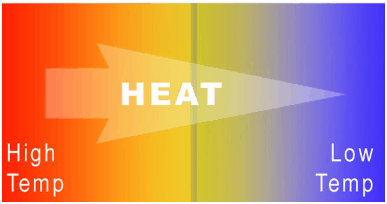
A particularly important concept is thermodynamic equilibrium. In general, when two objects are brought into thermal contact, heat will flow between them until they come into equilibrium with each other.  When a temperature difference does exist heat flows spontaneously from the warmer system to the colder system. Heat transfer occurs by conduction or by thermal radiation. When the flow of heat stops, they are said to be at the same temperature. They are then said to be in thermal equilibrium.

For example, you leave a thermometer in a cup of coffee. As the two objects interact, the thermometer becomes hotter and the coffee cools off a little until they come into thermal equilibrium. Two objects are defined to be in thermal equilibrium if, when placed in thermal contact, no net energy flows from one to the other, and their temperatures don’t change. We may postulate:

When the two objects are in thermal equilibrium, their temperatures are equal.

This is a subject of a law that is called the “zeroth law of thermodynamics”.

 
Zeroth Law of Thermodynamics
Zeroth law of thermodynamics
Zeroth law of thermodynamics: If two systems are both in thermal equilibrium with a third then they are in thermal equilibrium with each other.

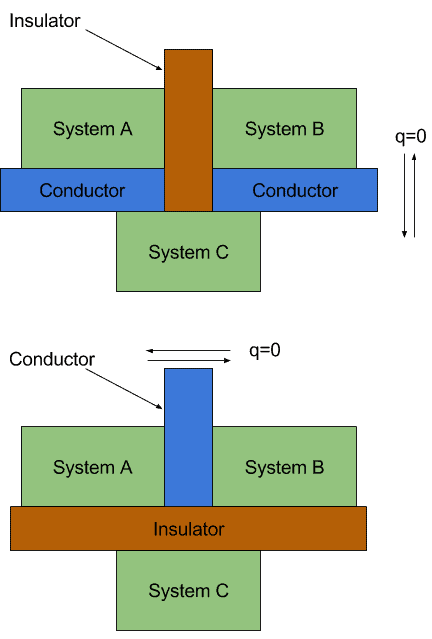
We can discover an important property of thermal equilibrium by considering three systems. A, B, and C, that initially are not in thermal equilibrium. We separate systems A and B with an adiabatic wall (ideal insulating material), but we let system C interact with both systems A and B. We wait until thermal equilibrium is reached; then A and B are each in thermal equilibrium with C. But are they in thermal equilibrium with each other?

According to many experiments, there will be no net energy flow between A and B. This is an experimental evidence of the following statement:

If two systems are both in thermal equilibrium with a third then they are in thermal equilibrium with each other.  

This statement is known as the zeroth law of thermodynamics. It has this unusual name because it was not until after the great first and second laws of thermodynamics were worked out that scientists realized that this apparently obvious postulate needed to be stated first.

This law provides a definition and method of defining temperatures, perhaps the most important intensive property of a system when dealing with thermal energy conversion problems. Temperature is a property of a system that determines whether the system will be in thermal equilibrium with other systems. When two systems are in thermal equilibrium, their temperatures are, by definition, equal, and no net thermal energy will be exchanged between them. Thus the importance of the zeroth law is that it allows a useful definition of temperature.

Temperature is a very important characteristics of matter. Many properties of matter change with temperature. The length of a metal rod, steam pressure in a boiler, the ability of a wire to conduct an electric current, and the color of a very hot glowing object. All these depend on temperature.

For example, most materials expand when their temperature is increased. This property is very important in all of the science and engineering, even in nuclear engineering. The thermodynamic efficiency of power plants changes with temperature of inlet steam or even with outside temperature. At higher temperatures, solids such as steel glow orange or even white depending on temperature. The white light from an ordinary incandescent lightbulb comes from an extremely hot tungsten wire. It can be seen temperature is one of the fundamental characteristics that describes matter and influences matter behaviour.

 
Kinetic Temperature
Kinetic theory of gases provides a microscopic explanation of temperature. It is based on the fact that during an elastic collision between a molecule with high kinetic energy and one with low kinetic energy, part of energy will transfer to the molecule of lower kinetic energy. Temperature is therefore related to the kinetic energies of the molecules of a material. Since this relationship is fairly complex, it will be discussed later.
 
How temperature influences the reactivity of the core
In an operating power reactors the neutron population is always large enough to generated heat. In fact, it is the main purpose of power reactors to generate large amount of heat. This causes the temperature of the system changes and material densities change as well (due to the thermal expansion).

Because macroscopic cross sections are proportional to densities and temperatures, neutron flux spectrum depends also on the density of moderator, these changes in turn will produce some changes in reactivity. These changes in reactivity are usually called the reactivity feedbacks and are characterized by reactivity coefficients. This is very important area of reactor design, because the reactivity feedbacks influence the stability of the reactor. For example, reactor design must assure that under all operating conditions the temperature feedback will be negative.

See also: Moderator Temperature Coefficient

See also: Doppler Coefficient

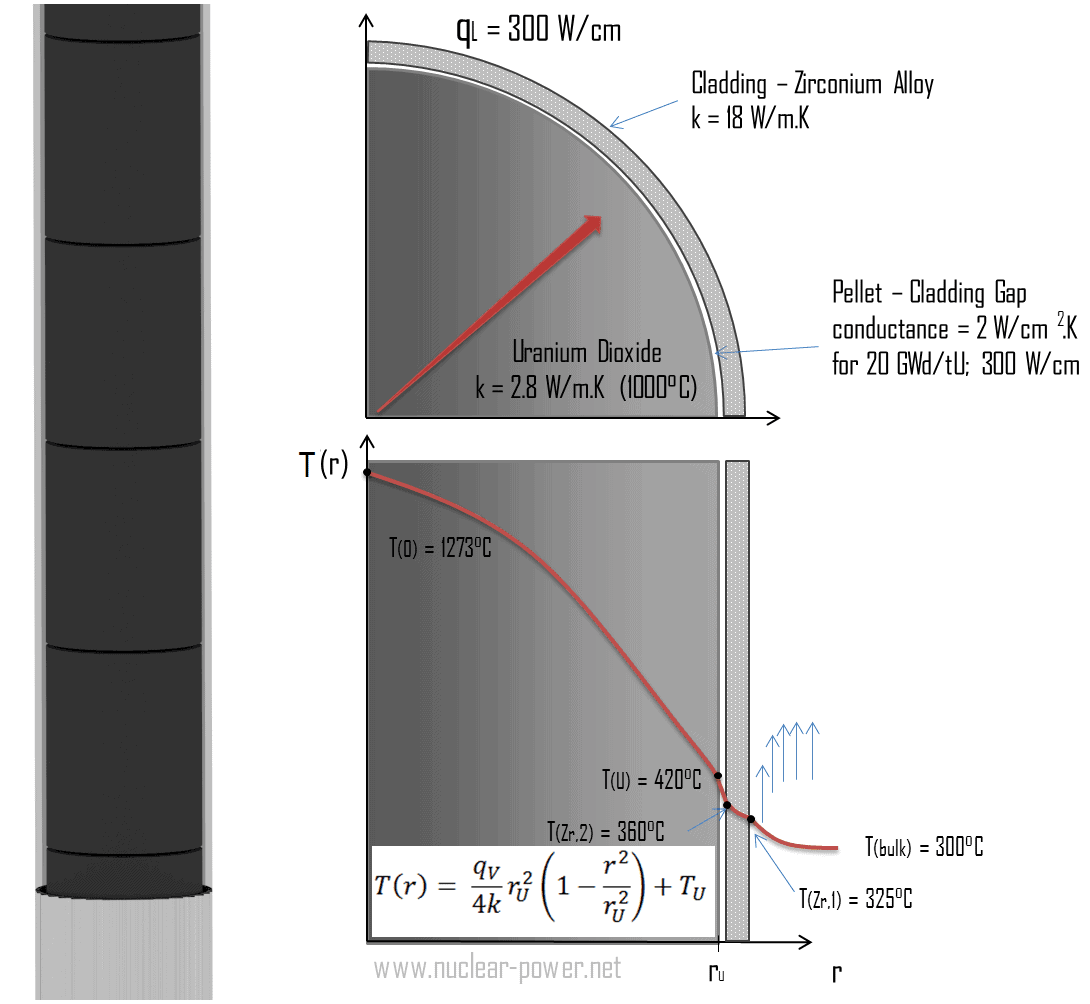
Nuclear Fuel - Operating Temperatures
The temperature in an operating reactor varies from point to point within the system. As a consequence, there is always one fuel rod and one local volume, that are hotterthan all the rest. In order to limit these hot places the peak power limits must be introduced. The peak power limits are associated with a boiling crisis and with the conditions which could cause fuel pellet melt. However, metallurgical considerations place an upper limits on the temperature of the fuel cladding and the fuel pellet. Above these temperatures there is a danger that the fuel may be damaged. One of the major objectives in the design of a nuclear reactors is to provide for the removal of the heat produced at the desired power level, while assuring that the maximum fuel temperature and the maximum cladding temperature are always below these predetermined values.

See also: Heat Equation

Nuclear Fuel - Temperatures

Temperature Scales

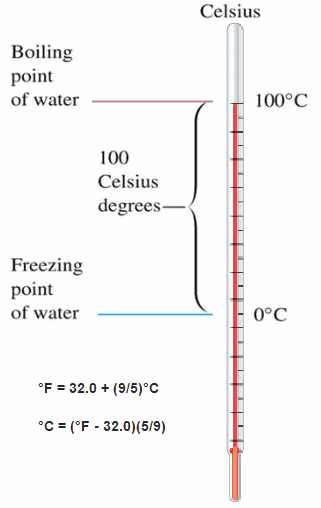
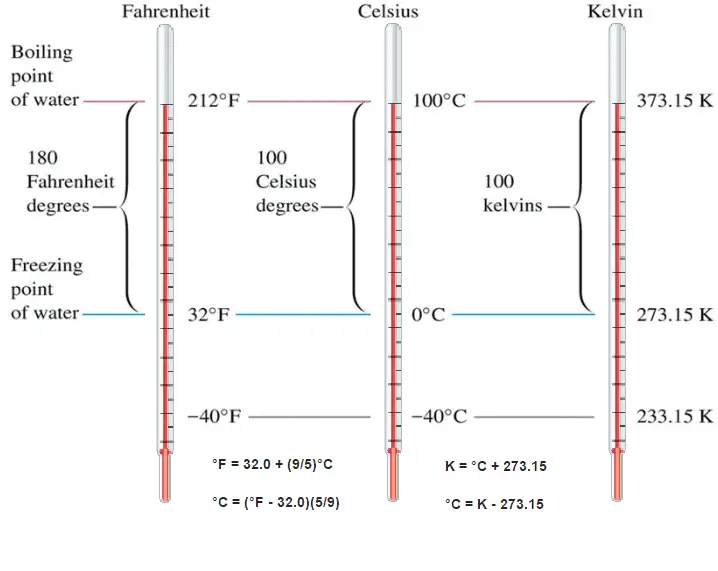
Temperature Conversion - Fahrenheit - CelsiusWhen using a thermometer, we need to mark a scale on the tube wall with numbers on it. We have to define a temperature scale. A temperature scale is a way to measure temperature relative to a starting point (0 or zero) and a unit of measurement.

These numbers are arbitrary, and historically many different schemes have been used. For example, this was done by defining some physical occurrences at given temperatures—such as the freezing and boiling points of water — and defining them as 0 and 100 respectively.

There are several scales and units exist for measuring temperature. The most common are:

  • Celsius (denoted °C),
  • Fahrenheit (denoted °F),
  • Kelvin (denoted K; especially in science).
 
Fahrenheit Scale
Fahrenheit temperature scale
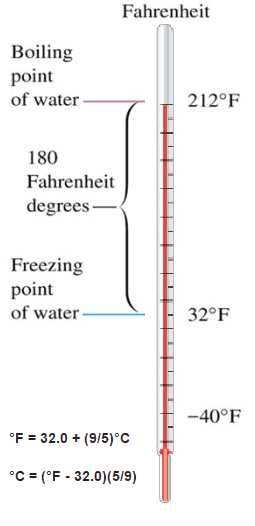
Fahrenheit temperature scale is based on two points: the temperature of a solution of brine as 0°F and the average human body temperature as 100°F.

The Celsius scale and the Fahrenheit scale are based on a specification of the number of increments between the freezing point and boiling point of water at standard atmospheric pressure. The Celsius scale has 100 units between these points, and the Fahrenheit scale has 180 units, where each units represents 1°C or 1 °F respectively. The zero points on the scales are arbitrary.

Fahrenheit scale is based on two points:

  • The lower defining point, 0 °F, was established as the temperature of a solution of brine made from equal parts of ice and salt.
  • The upper defining point, 96 °F, was established as the average human body temperature (96 °F, about 2.6 °F less than the modern value due to a later redefinition of the scale)

The difference in height between the two points would then be marked off in 180 divisions with each division representing 1 °F. The scale is today usually defined by two fixed points: the temperature at which water freezes into ice is defined as 32 °F, and the boiling point of water is defined to be 212 °F.

Temperature Conversion – Fahrenheit – Celsius

To convert from a Fahrenheit temperature to a Celsius temperature we have to subtract 32 degrees from the Fahrenheit reading to get to the zero point on the Celsius scale and then adjust for the different size degrees. The ratio of the size of the degrees is 5/9 so that the relationship between the scales is represented by the following equations:

°F = 32.0 + (9/5)°C

°C = (°F – 32.0)(5/9)

Celsius Scale
Celsius temperature scale
Celsius temperature scale is based on two points: the boiling point of water as 100° C and the freezing point of water as 0° C.

About 20 years after Fahrenheit proposed its temperature scale for thermometer, Swedish professor Anders Celsius defined a better scale for measuring temperature. He proposed using the boiling point of water as 100° C and the freezing point of water as 0° C. Water was chosen as the reference material because it was always available in most laboratories around the world.

Celsius temperature scale is also called centigrade temperature scale  because of the 100-degree interval between the defined points. The Celsius temperature for a state colder than freezing water is a negative number. The Celsius scale is used, both in everyday life and in science and industry, almost everywhere in the world.

Absolute zero, the lowest temperature possible, is defined as being precisely 0 K and −273.15 °C. The temperature of the triple point of water is defined as precisely 273.16 K and 0.01 °C. This definition fixes the magnitude of both the degree Celsius and the kelvin as precisely 1 part in 273.16 of the difference between absolute zero and the triple point of water.

It must be added, by international agreement the unit “degree Celsius” and the Celsius scale are currently defined by two different points: absolute zero, and the triple point of water (instead of boiling and freezing points). This definition also precisely relates the Celsius scale to the Kelvin scale, which defines the SI base unit of thermodynamic temperature.

Temperature Conversion – Fahrenheit – Celsius

To convert from a Fahrenheit temperature to a Celsius temperature we have to subtract 32 degrees from the Fahrenheit reading to get to the zero point on the Celsius scale and then adjust for the different size degrees. The ratio of the size of the degrees is 5/9 so that the relationship between the scales is represented by the following equations:

°F = 32.0 + (9/5)°C
°C = (°F – 32.0)(5/9)

Kelvin Scale
Kelvin temperature scale
The Kelvin temperature scale was determined based on the Celsius scale, but with a starting point at absolute zero.

Kelvin temperature scale is the base unit of thermodynamic temperature measurement in the International System (SI) of measurement. The Kelvin scale was determined based on the Celsius scale, but with a starting point at absolute zero. Temperatures in the Kelvin scale are 273 degrees less than in the Celsius scale. The kelvin is defined as the fraction  1⁄273.16 of the thermodynamic temperature of the triple point of water. By international agreement, the triple point of water has been assigned a value of 273.16 K (0.01 °C; 32.02 °F) and a partial vapor pressure of 611.66 pascals (6.1166 mbar; 0.0060366 atm). In other words, it is defined such that the triple point of water is exactly 273.16 K.

Note that the unit on the absolute scale is Kelvins, not degrees Kelvin. It was named in honor of Lord Kelvin who had a great deal to do with the development of temperature measurement and thermodynamics.

The absolute temperature scale that corresponds to the Celsius scale is called the Kelvin (K) scale, and the absolute scale that corresponds to the Fahrenheit scale is called the Rankine (R) scale. The zero points on both absolute scales represent the same physical state. The relationships between the absolute and relative temperature scales are shown in the following equations.

Kelvin – Celsius

K = °C + 273.15

°C = K – 273.15

Rankine – Fahrenheit

R = °F + 460

°F = R – 460

Absolute Zero

Such a scale has as its zero point. The coldest theoretical temperature is called absolute zero, at which the thermal motion of atoms and molecules reaches its minimum.  This is a state at which the enthalpy and entropy of a cooled ideal gas reaches its minimum value, taken as 0. Classically, this would be a state of motionlessness, but quantum uncertainty dictates that the particles still possess a finite zero-point energy. Absolute zero is denoted as 0 K on the Kelvin scale, −273.15 °C on the Celsius scale, and −459.67 °F on the Fahrenheit scale.

Absolute Zero and Third Law of Thermodynamics

Third law of thermodynamics states:

The entropy of a system approaches a constant value as the temperature approaches absolute zero.
Based on empirical evidence, this law states that the entropy of a pure crystalline substance is zero at the absolute zero of temperature, 0 K and that it is impossible by means of any process, no matter how idealized, to reduce the temperature of a system to absolute zero in a finite number of steps. This allows us to define a zero point for the thermal energy of a body.

Temperature required nuclear fusion to occur

Nuclear fusion reactionDeuterium-Tritium Fusion. The fusion reaction of deuterium and tritium is particularly interesting because of its potential of providing energy for the future.

3T (d, n) 4He

The reaction yields ~17 MeV of energy per reaction but requires a enormous temperature of approximately 40 million Kelvins to overcome the coulomb barrier by the attractive nuclear force, which is stronger at close distances. The deuterium fuel is abundant, but tritium must be either bred from lithium or gotten in the operation of the deuterium cycle.

Highest man-made temperature

On 13 August 2012 scientists at CERN’s Large Hadron Collider (LHC), Geneva, Switzerland, announced that they created a quark-gluon plasma with a record-smashing temperature of 5.5 trillion K.

The team had been using the ALICE experiment, that is focused on studying the QCP and other conditions in the primordial universe, to smash together lead ions at 99% of the speed of light to create a quark gluon plasma. It is believed that up to a few milliseconds after the Big Bang, the Universe was in a quark–gluon plasma state, which is an exotic state of matter. It is thought quark–gluon plasma consist of asymptotically free quarks and gluons.

Lowest man-made temperature

According to Guiness World Records the lowest manmade temperature achieved to date is 450 picokelvin above absolute zero (only half-a-billionth of a degree above absolute zero). It was achieved by a team of scientists at the Massachusetts Institute of Technology, Cambridge, Massachusetts, USA.

 
References:
Reactor Physics and Thermal Hydraulics:
  1. J. R. Lamarsh, Introduction to Nuclear Reactor Theory, 2nd ed., Addison-Wesley, Reading, MA (1983).
  2. J. R. Lamarsh, A. J. Baratta, Introduction to Nuclear Engineering, 3d ed., Prentice-Hall, 2001, ISBN: 0-201-82498-1.
  3. W. M. Stacey, Nuclear Reactor Physics, John Wiley & Sons, 2001, ISBN: 0- 471-39127-1.
  4. Glasstone, Sesonske. Nuclear Reactor Engineering: Reactor Systems Engineering, Springer; 4th edition, 1994, ISBN: 978-0412985317
  5. Todreas Neil E., Kazimi Mujid S. Nuclear Systems Volume I: Thermal Hydraulic Fundamentals, Second Edition. CRC Press; 2 edition, 2012, ISBN: 978-0415802871
  6. Zohuri B., McDaniel P. Thermodynamics in Nuclear Power Plant Systems. Springer; 2015, ISBN: 978-3-319-13419-2
  7. Moran Michal J., Shapiro Howard N. Fundamentals of Engineering Thermodynamics, Fifth Edition, John Wiley & Sons, 2006, ISBN: 978-0-470-03037-0
  8. Kleinstreuer C. Modern Fluid Dynamics. Springer, 2010, ISBN 978-1-4020-8670-0.
  9. U.S. Department of Energy, THERMODYNAMICS, HEAT TRANSFER, AND FLUID FLOW. DOE Fundamentals Handbook, Volume 1, 2 and 3. June 1992.

See also:

Thermodynamic Properties

We hope, this article, Temperature – Physics, helps you. If so, give us a like in the sidebar. Main purpose of this website is to help the public to learn some interesting and important information about thermal engineering.
What is Thermal Equilibrium – Definition

Thermal equilibrium between two objects. When the flow of heat stops, they are said to be at the same temperature. They are then said to be in thermal equilibrium. Thermal Engineering

Thermal Equilibrium

Zeroth law of thermodynamics
Zeroth law of thermodynamics: If two systems are both in thermal equilibrium with a third then they are in thermal equilibrium with each other.

A particularly important concept is thermodynamic equilibrium. In general, when two objects are brought into thermal contact, heat will flow between them until they come into equilibrium with each other.  When a temperature difference does exist heat flows spontaneously from the warmer system to the colder system. Heat transfer occurs by conduction or by thermal radiation. When the flow of heat stops, they are said to be at the same temperature. They are then said to be in thermal equilibrium.

See also: What is Temperature

For example, you leave a thermometer in a cup of coffee. As the two objects interact, the thermometer becomes hotter and the coffee cools off a little until they come into thermal equilibrium. Two objects are defined to be in thermal equilibrium if, when placed in thermal contact, no net energy flows from one to the other, and their temperatures don’t change. We may postulate:

When the two objects are in thermal equilibrium, their temperatures are equal.

This is a subject of a law that is called the “zeroth law of thermodynamics”.

 
Zeroth Law of Thermodynamics
Zeroth law of thermodynamics
Zeroth law of thermodynamics: If two systems are both in thermal equilibrium with a third then they are in thermal equilibrium with each other.

We can discover an important property of thermal equilibrium by considering three systems. A, B, and C, that initially are not in thermal equilibrium. We separate systems A and B with an adiabatic wall (ideal insulating material), but we let system C interact with both systems A and B. We wait until thermal equilibrium is reached; then A and B are each in thermal equilibrium with C. But are they in thermal equilibrium with each other?

According to many experiments, there will be no net energy flow between A and B. This is an experimental evidence of the following statement:

If two systems are both in thermal equilibrium with a third then they are in thermal equilibrium with each other.  

This statement is known as the zeroth law of thermodynamics. It has this unusual name because it was not until after the great first and second laws of thermodynamics were worked out that scientists realized that this apparently obvious postulate needed to be stated first.

This law provides a definition and method of defining temperatures, perhaps the most important intensive property of a system when dealing with thermal energy conversion problems. Temperature is a property of a system that determines whether the system will be in thermal equilibrium with other systems. When two systems are in thermal equilibrium, their temperatures are, by definition, equal, and no net thermal energy will be exchanged between them. Thus the importance of the zeroth law is that it allows a useful definition of temperature.

Temperature is a very important characteristics of matter. Many properties of matter change with temperature. The length of a metal rod, steam pressure in a boiler, the ability of a wire to conduct an electric current, and the color of a very hot glowing object. All these depend on temperature.

For example, most materials expand when their temperature is increased. This property is very important in all of the science and engineering, even in nuclear engineering. The thermodynamic efficiency of power plants changes with temperature of inlet steam or even with outside temperature. At higher temperatures, solids such as steel glow orange or even white depending on temperature. The white light from an ordinary incandescent lightbulb comes from an extremely hot tungsten wire. It can be seen temperature is one of the fundamental characteristics that describes matter and influences matter behaviour.

 
References:
Reactor Physics and Thermal Hydraulics:
  1. J. R. Lamarsh, Introduction to Nuclear Reactor Theory, 2nd ed., Addison-Wesley, Reading, MA (1983).
  2. J. R. Lamarsh, A. J. Baratta, Introduction to Nuclear Engineering, 3d ed., Prentice-Hall, 2001, ISBN: 0-201-82498-1.
  3. W. M. Stacey, Nuclear Reactor Physics, John Wiley & Sons, 2001, ISBN: 0- 471-39127-1.
  4. Glasstone, Sesonske. Nuclear Reactor Engineering: Reactor Systems Engineering, Springer; 4th edition, 1994, ISBN: 978-0412985317
  5. Todreas Neil E., Kazimi Mujid S. Nuclear Systems Volume I: Thermal Hydraulic Fundamentals, Second Edition. CRC Press; 2 edition, 2012, ISBN: 978-0415802871
  6. Zohuri B., McDaniel P. Thermodynamics in Nuclear Power Plant Systems. Springer; 2015, ISBN: 978-3-319-13419-2
  7. Moran Michal J., Shapiro Howard N. Fundamentals of Engineering Thermodynamics, Fifth Edition, John Wiley & Sons, 2006, ISBN: 978-0-470-03037-0
  8. Kleinstreuer C. Modern Fluid Dynamics. Springer, 2010, ISBN 978-1-4020-8670-0.
  9. U.S. Department of Energy, THERMODYNAMICS, HEAT TRANSFER, AND FLUID FLOW. DOE Fundamentals Handbook, Volume 1, 2 and 3. June 1992.

See also:

Temperature

We hope, this article, Thermal Equilibrium, helps you. If so, give us a like in the sidebar. Main purpose of this website is to help the public to learn some interesting and important information about thermal engineering.
What is Zeroth Law of Thermodynamics – Definition

Zeroth Law of Thermodynamics: If two systems are both in thermal equilibrium with a third then they are in thermal equilibrium with each other. Thermal Engineering

Zeroth Law of Thermodynamics

Zeroth law of thermodynamics
Zeroth law of thermodynamics: If two systems are both in thermal equilibrium with a third then they are in thermal equilibrium with each other.

We can discover an important property of thermal equilibrium by considering three systems. A, B, and C, that initially are not in thermal equilibrium. We separate systems A and B with an adiabatic wall (ideal insulating material), but we let system C interact with both systems A and B. We wait until thermal equilibrium is reached; then A and B are each in thermal equilibrium with C. But are they in thermal equilibrium with each other?

According to many experiments, there will be no net energy flow between A and B. This is an experimental evidence of the following statement:

If two systems are both in thermal equilibrium with a third then they are in thermal equilibrium with each other.  

This statement is known as the zeroth law of thermodynamics. It has this unusual name because it was not until after the great first and second laws of thermodynamics were worked out that scientists realized that this apparently obvious postulate needed to be stated first.

zeroth-law-of-thermodynamics-heatThis law provides a definition and method of defining temperatures, perhaps the most important intensive property of a system when dealing with thermal energy conversion problems. Temperature is a property of a system that determines whether the system will be in thermal equilibrium with other systems. When two systems are in thermal equilibrium, their temperatures are, by definition, equal, and no net thermal energy will be exchanged between them. Thus the importance of the zeroth law is that it allows a useful definition of temperature.

 
References:
Reactor Physics and Thermal Hydraulics:
  1. J. R. Lamarsh, Introduction to Nuclear Reactor Theory, 2nd ed., Addison-Wesley, Reading, MA (1983).
  2. J. R. Lamarsh, A. J. Baratta, Introduction to Nuclear Engineering, 3d ed., Prentice-Hall, 2001, ISBN: 0-201-82498-1.
  3. W. M. Stacey, Nuclear Reactor Physics, John Wiley & Sons, 2001, ISBN: 0- 471-39127-1.
  4. Glasstone, Sesonske. Nuclear Reactor Engineering: Reactor Systems Engineering, Springer; 4th edition, 1994, ISBN: 978-0412985317
  5. Todreas Neil E., Kazimi Mujid S. Nuclear Systems Volume I: Thermal Hydraulic Fundamentals, Second Edition. CRC Press; 2 edition, 2012, ISBN: 978-0415802871
  6. Zohuri B., McDaniel P. Thermodynamics in Nuclear Power Plant Systems. Springer; 2015, ISBN: 978-3-319-13419-2
  7. Moran Michal J., Shapiro Howard N. Fundamentals of Engineering Thermodynamics, Fifth Edition, John Wiley & Sons, 2006, ISBN: 978-0-470-03037-0
  8. Kleinstreuer C. Modern Fluid Dynamics. Springer, 2010, ISBN 978-1-4020-8670-0.
  9. U.S. Department of Energy, THERMODYNAMICS, HEAT TRANSFER, AND FLUID FLOW. DOE Fundamentals Handbook, Volume 1, 2 and 3. June 1992.

See also:

Temperature

We hope, this article, Zeroth Law of Thermodynamics, helps you. If so, give us a like in the sidebar. Main purpose of this website is to help the public to learn some interesting and important information about thermal engineering.